The California Franchise Tax Board reported that for the 2025 processing period, over $237 million were assessed on individuals and families that did not have health insurance.
The penalty assessment is from California’s individual mandate law that states individuals must either have creditable health insurance or a valid exemption from paying a penalty.
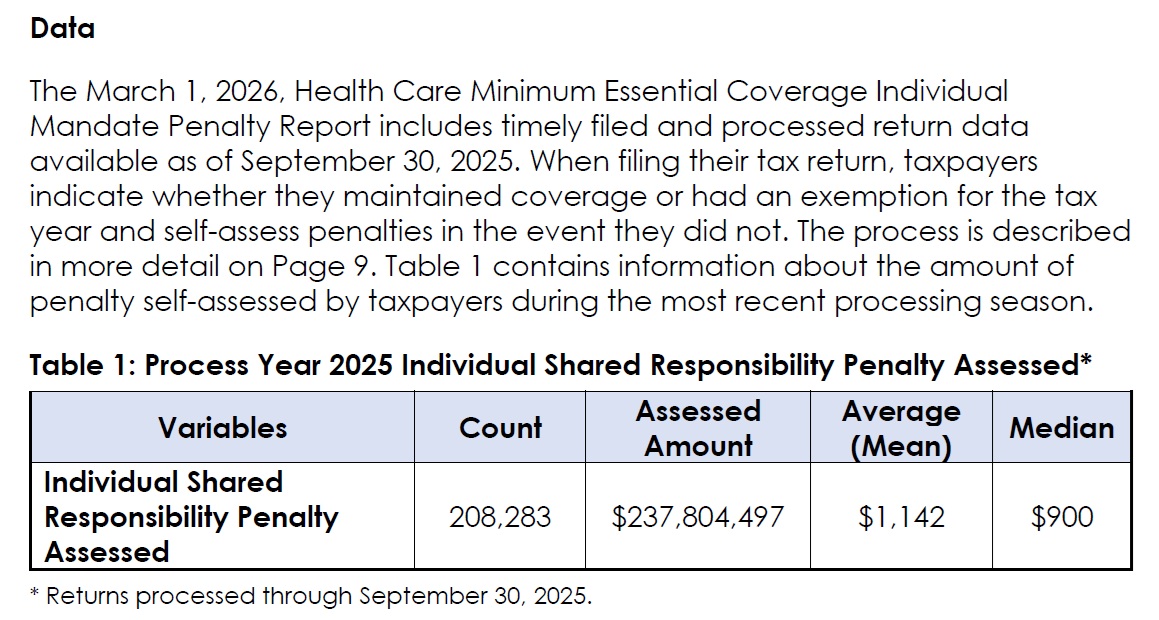
The Health Care Minimum Essential Coverage Individual Mandate Report stated the 208,283 tax filings indicated either partial or full year lack of health insurance for household members. The average penalty was $1,142.

The report was published in February 2026 covering the 2025 processing year through September 2025. Tax filers self-report a lack of health insurance coverage. The report noted that some penalties were in the income exempt range and may not be accurate as people of low income are not subject to the individual mandate penalty.
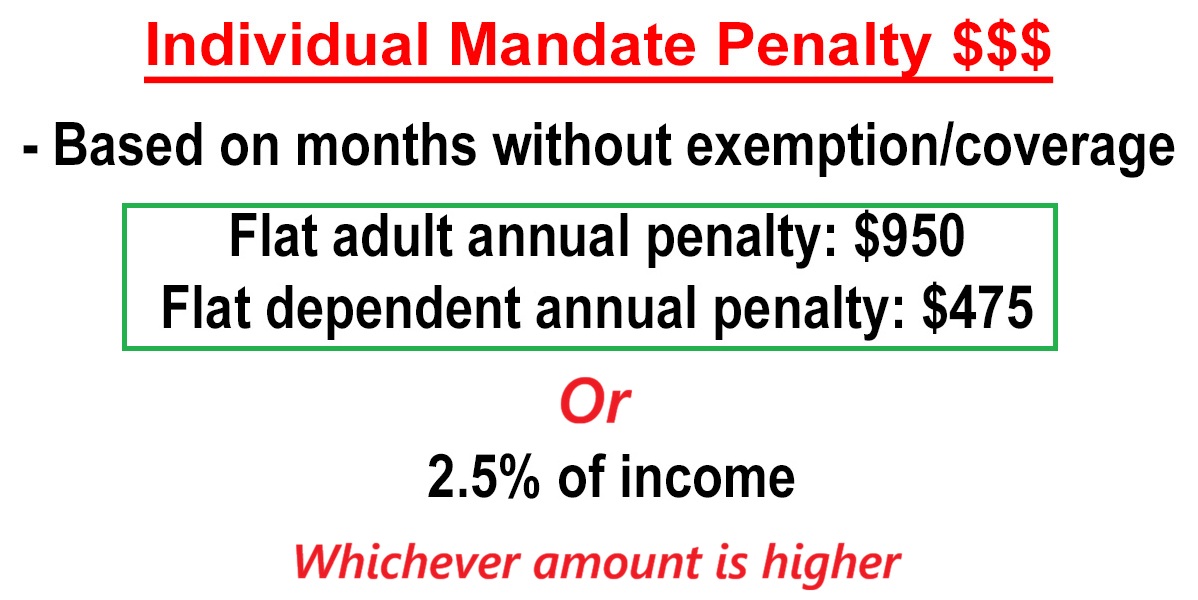
The penalty is based on months. Consequently, an individual who was without health insurance for three months would not pay the full annual penalty. For adults, the penalty is $950 and $475 for children for a full year of no health insurance coverage. The flat fee is superseded by an alternate penalty of 2.5 percent of the household income. As the household income increases, the 2.5 percent of income penalty is larger than the flat fee and that higher amount becomes the penalty.
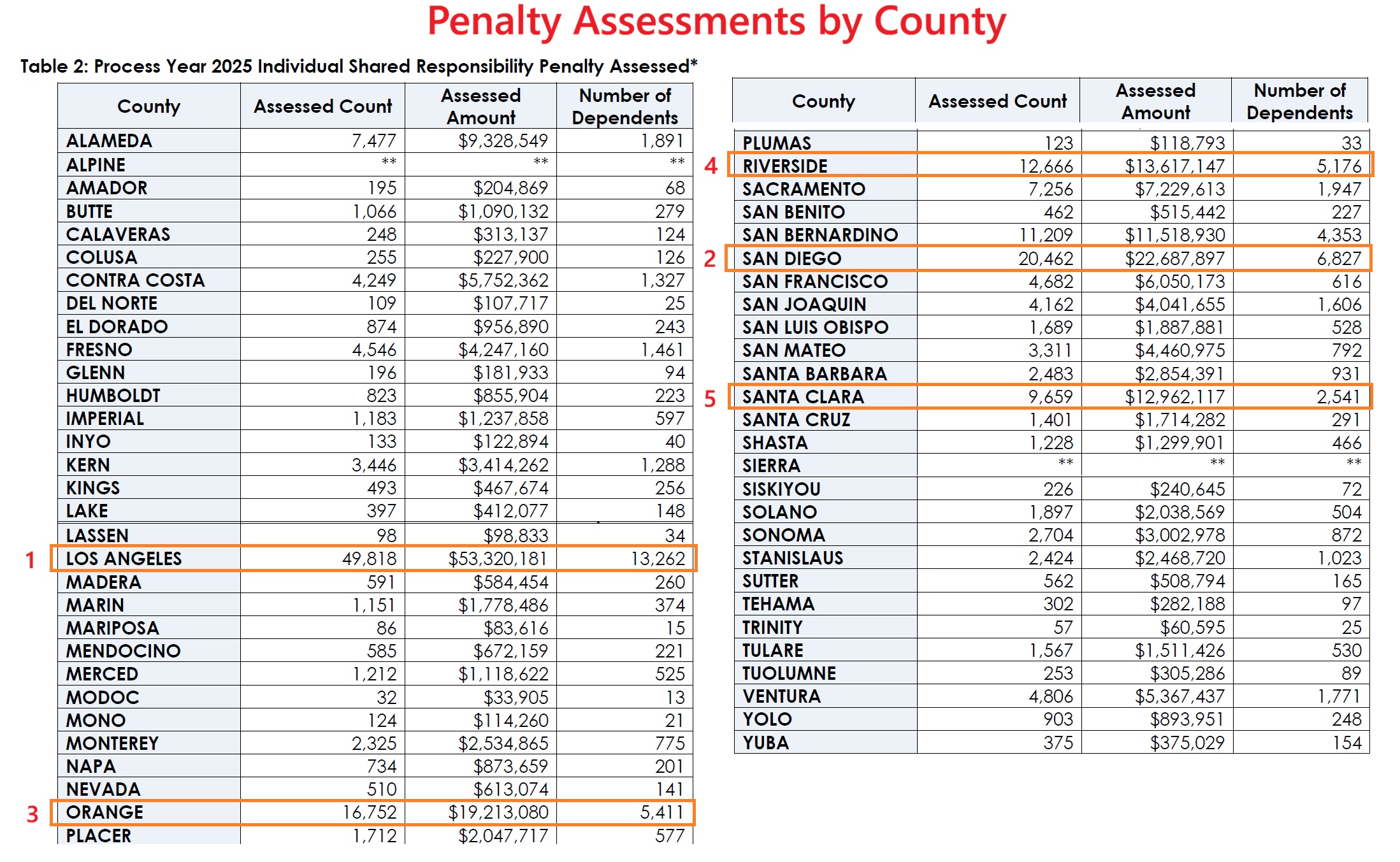
The Franchise Tax Board report lists the count and assessed penalty by county. The highest reporting counties for penalties and assessments are Los Angeles, San Diego, Orange, Riverside and Santa Clara. The report did not give the count totals as a percentage of the county population.
Individual Mandate Penalties by Income Groups
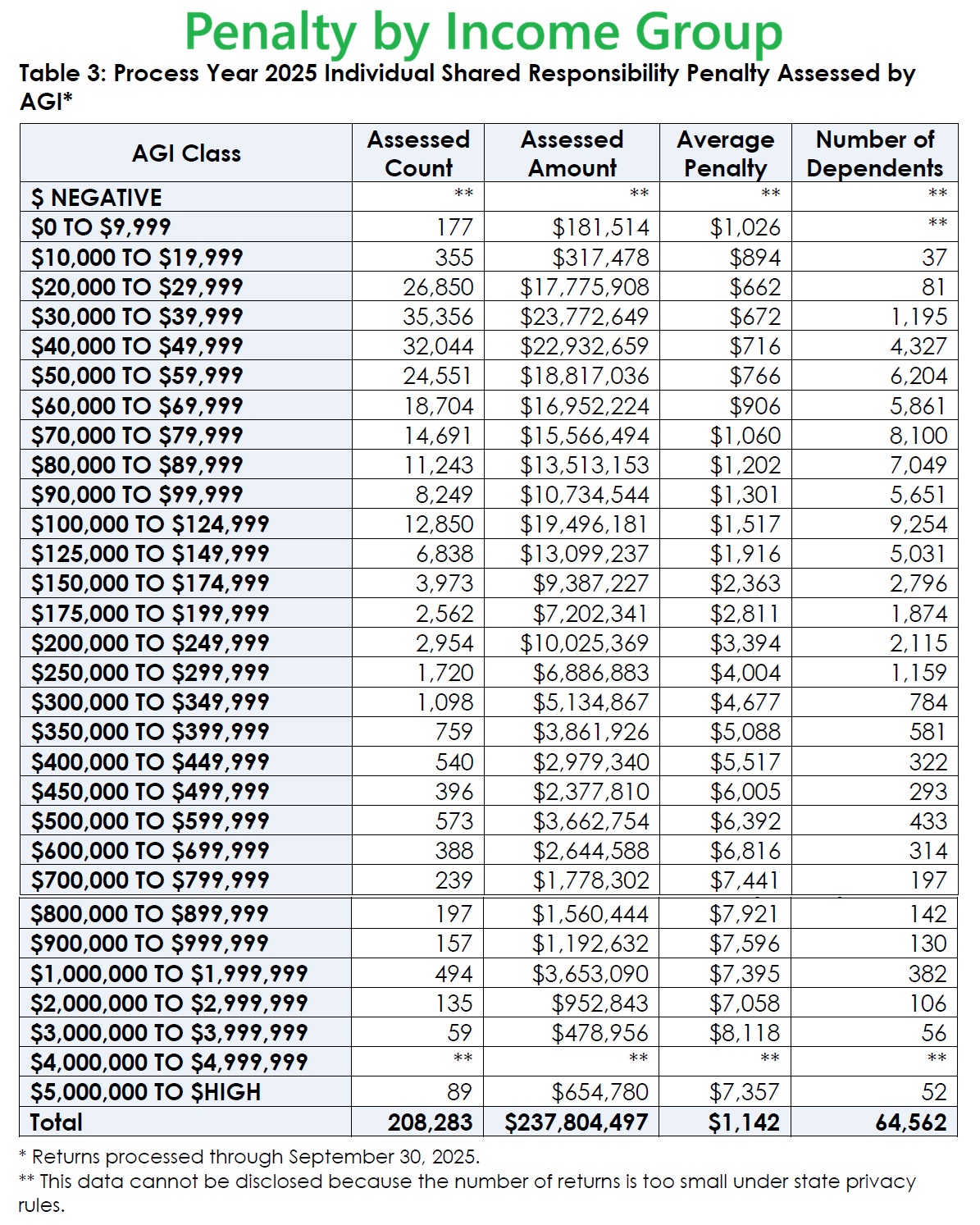
The assessed counts, dollar amounts, and average penalty are separated by income ranges in the report.
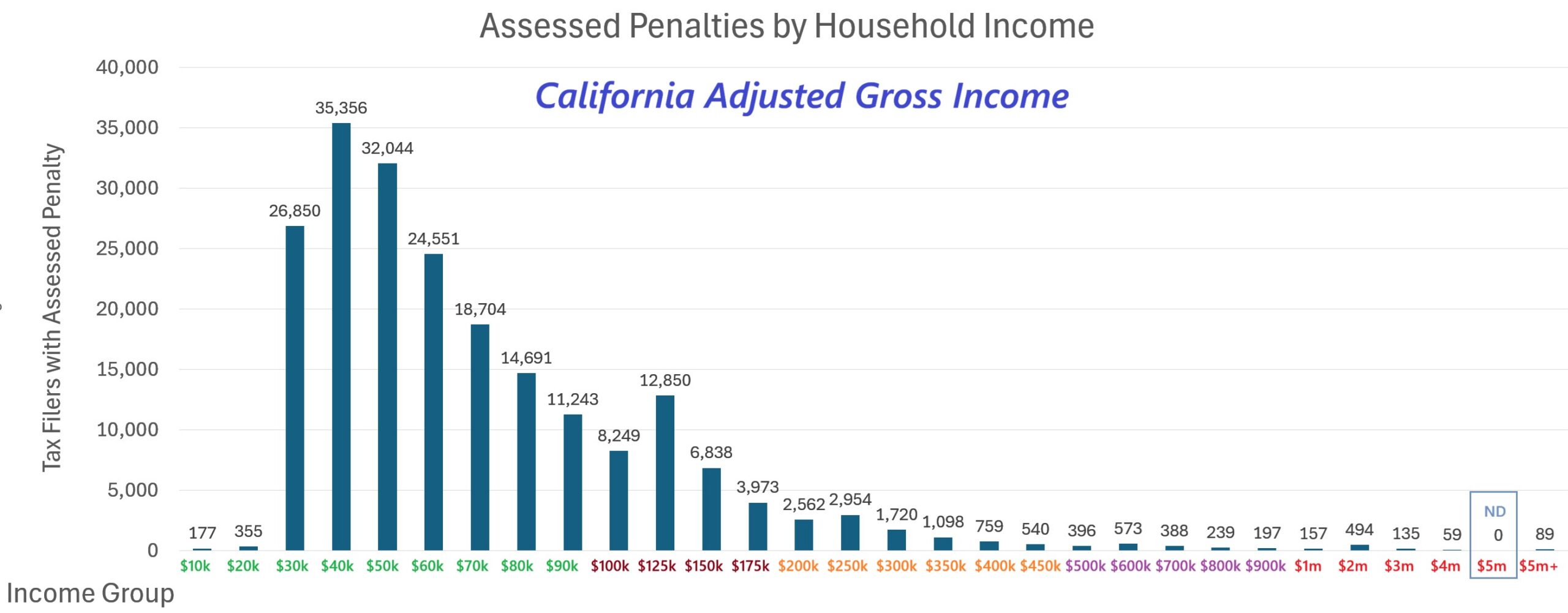
To understand the penalty assessments better, I created graphs of the penalty by income groups. The income of $30k to $39k group (referred to as $40 on the graph) has the most penalty assessments of 35,356. In other words, 35,356 tax returns reported they were subject to the individual mandate penalty for part or all of the 2024 tax year. Some of the captured data may be for prior tax years, processed during 2025.
Also note that the income group dollar range is increased by the Franchise Tax Board. Under $100k, the range increments are $10k. They then use $25k increments between $100k and $200k income. The increment increases to $50k for income between $200k and $500k. From $500k to $1 million, $100k increments are used for grouping assessments. Finally, over $1 million are group every $1 million of income increase.
This increased income range grouping may account for the odd blip of increased penalties in the $125k group. The penalty count jumps from 8,249 at $100k up to $12,850 for $125k. The $150k group shows a count of 6,838 that is in line for the decreasing number trend of the income groups.
Average Penalty by Income Group
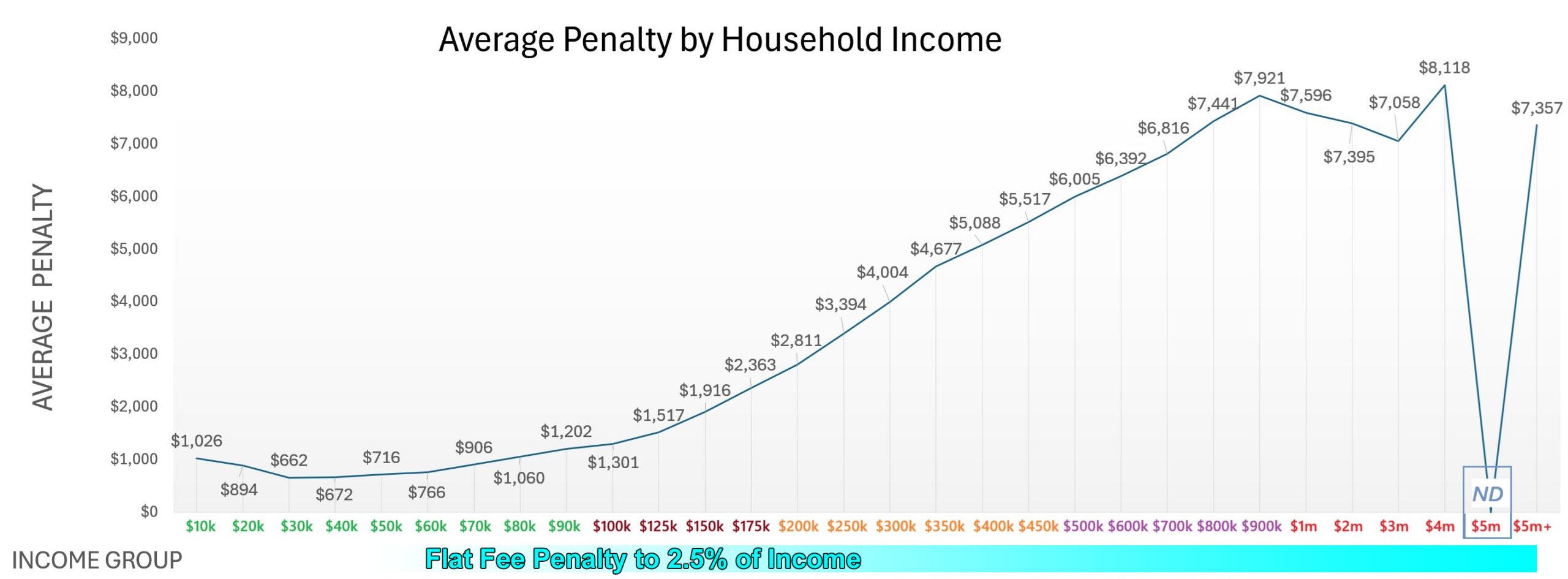
The average penalty graph illustrates the increasing average penalty assessed to tax filers as their income increases. The average penalty for the $10k and $20k group is probably a tax filer error as income in those ranges would most likely not be subject to the individual mandate penalty. The lowest average penalty of $672 occurs in the $40k income group that also had the highest number of returns with penalty assessments.
The slope of the curve increases at the $125k income group. This is also the point where, for many families, the 2.5% of income penalty calculation is greater than the flat penalty amount. The highest average penalty happens at the $900k and $4 million income groups. The $900k income group had an average penalty of $7,921 and the $4 million group average penalty was $8,118. There was no data published for the $5 million income group.
Total Assessed Penalties by Income Group
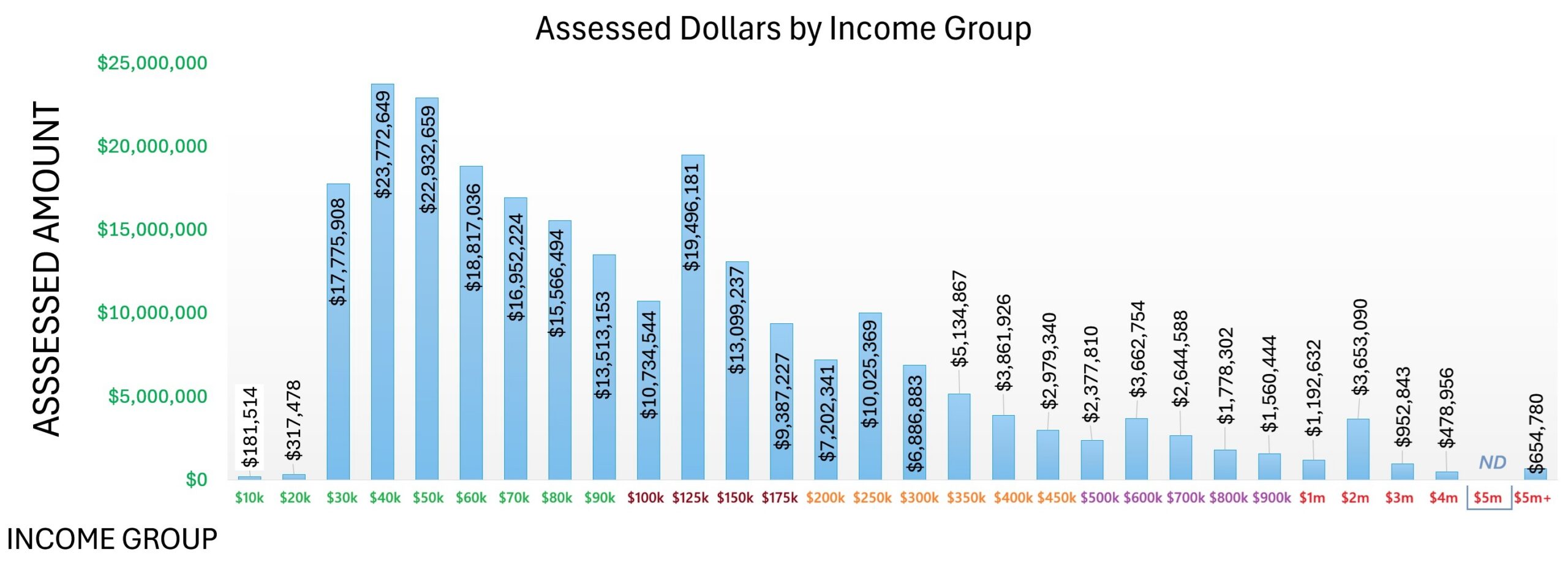
My final graph of the data is the assessed penalty dollar amount by income group. The $40k group reported an assessed penalty of $23 million, higher than any other group. But this income group also had the largest number of tax filings reporting penalties. We see the blip return at the $125k group with an assessed value of $19 million. This is almost double the amount of the $100k group.
One explanation is that households in this group erroneously concluded they were ineligible for the Covered California subsidies because their income was greater than 400 percent of the federal poverty level and decided to drop health insurance. However, from 2021 to 2025, incomes over 400 percent of the federal poverty level were eligible for the ACA subsidies. Prior to 2021, like 2026, household income over 400 percent of the federal poverty level will not receive subsidies.
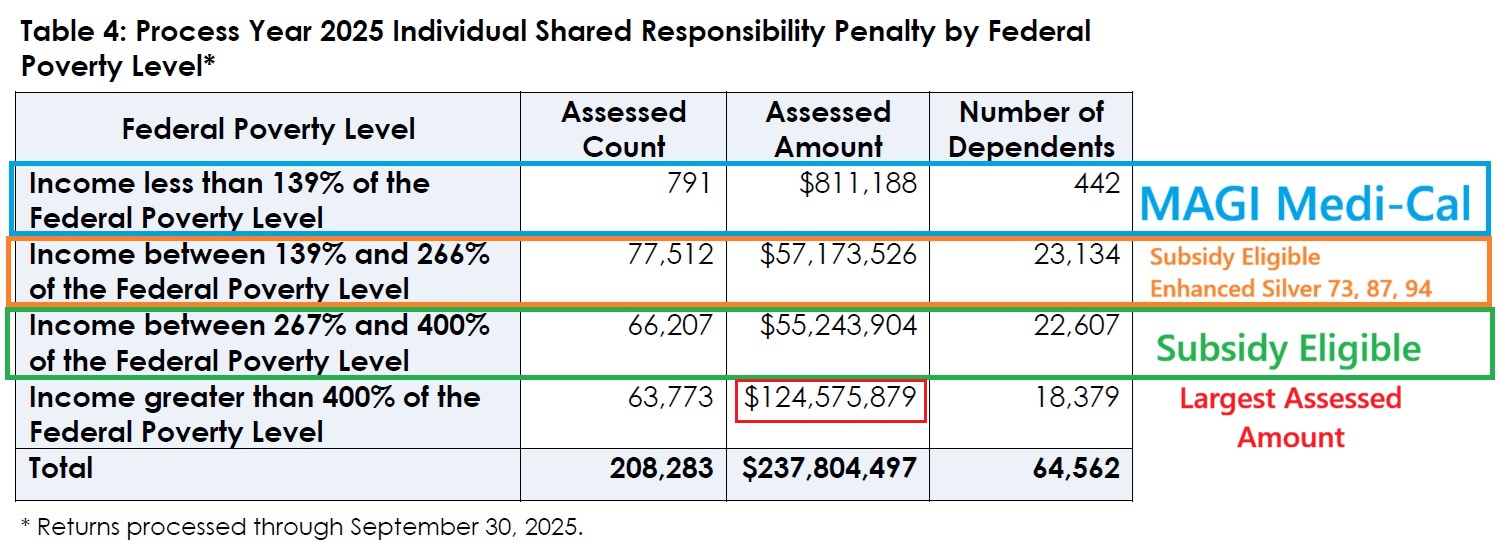
Exemptions from Individual Mandate Penalty
The Franchise Tax Board report broke out the penalty counts and assessed amounts by federal poverty levels. What is striking is the number of households between 139% and 266% FPL that were subsidy eligible. The 77,512 assessed count represented 23,134 children who could have had Medi-Cal which is available to children whose household income is under 266% FPL. Of the tax filers over 400 percent of the federal poverty level, they accounted for 31 percent of the penalty count and represent 52 percent of the total penalty assessments of $237 million.
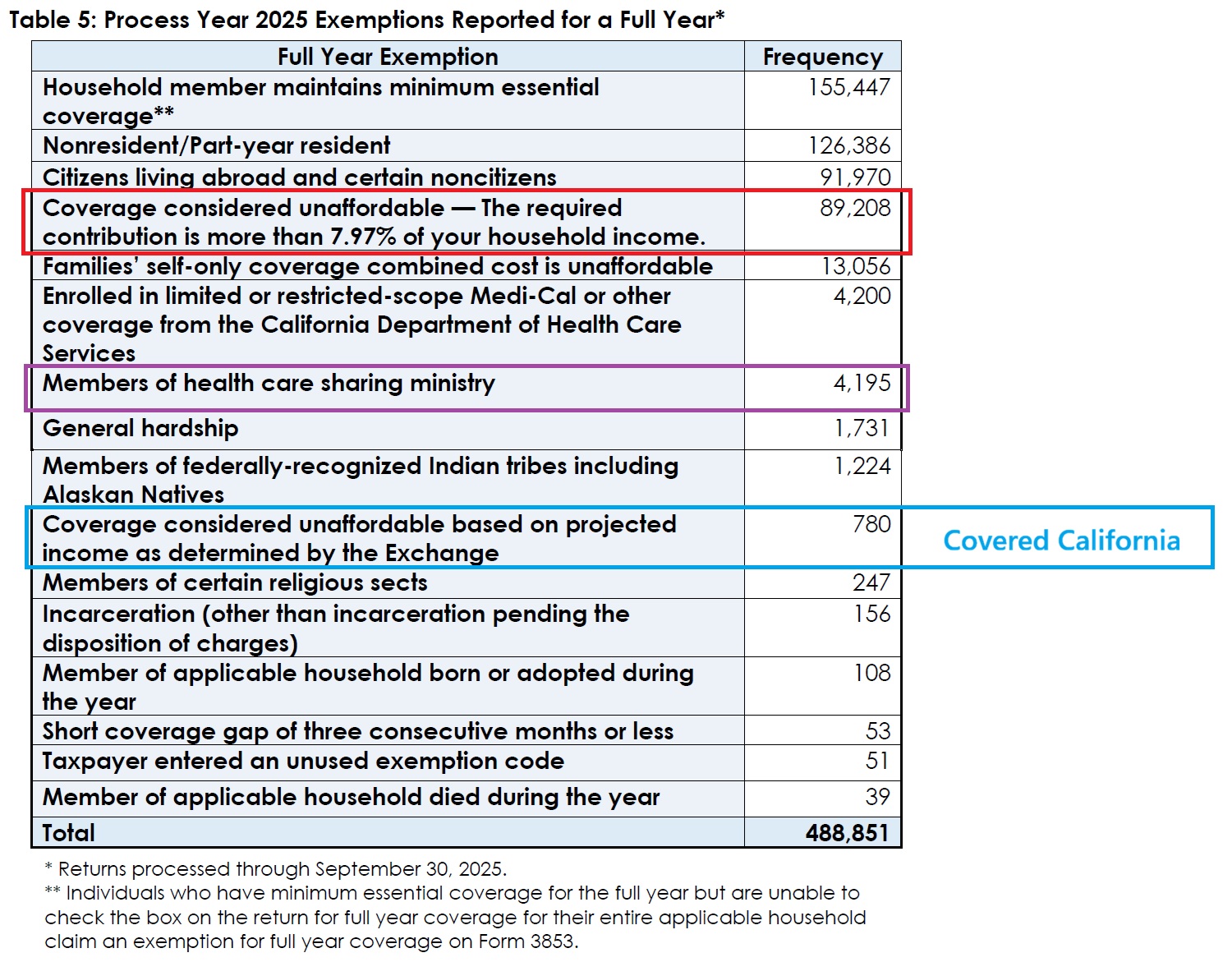
Also within the report is the list of exemptions tax filers reported to avoid the individual mandate penalty. We will see the exemption of “Coverage considerable unaffordable” grow in 2026 as the ACA subsidies have been trimmed down. Individuals and families can also apply to Covered California for an exemption based on affordability, which would allow them to enroll in minimum coverage plans if they are over 30 years of age.
Penalty Report FTB 2025
Health Insurance Individual Mandate Penalty Assessment Report for 2025 by California Franchise Tax Board.
YouTube video on the 2025 individual mandate penalty report.