Federal officials have announced the cancellation of hundreds of thousands of Affordable Care Act enrollments that they characterize as unauthorized. The announcement raises serious questions about due process, the role of health insurance companies, the quality of HealthCare.gov’s eligibility checks, and whether mistakes are being treated as fraud.

First, an important distinction: this federal action does not directly affect Covered California enrollments. California operates a state-based marketplace. Covered California coordinates with the federal government and follows federal ACA rules, but it manages its own enrollment system. The cancellations discussed by federal officials concern HealthCare.gov, which serves many other states.
What CMS Announced
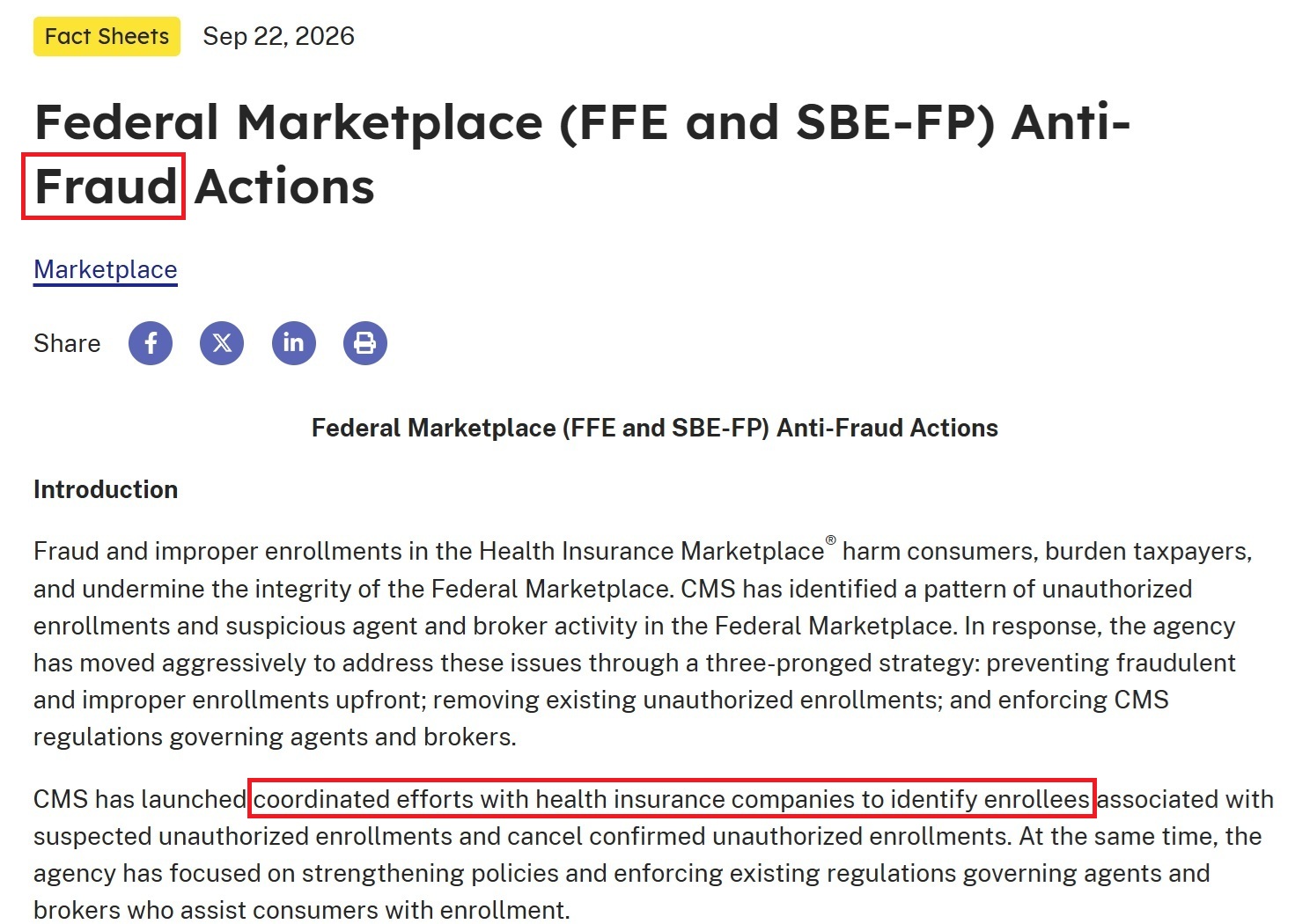
After the press conference offered limited detail, I reviewed the Centers for Medicare & Medicaid Services fact sheet describing federal Marketplace anti-fraud actions. According to CMS, a coordinated review with health insurance companies led to the cancellation of approximately 315,000 enrollments covering about 760,000 people. CMS associated those enrollments with roughly $2.2 billion in advance premium tax credit payments.
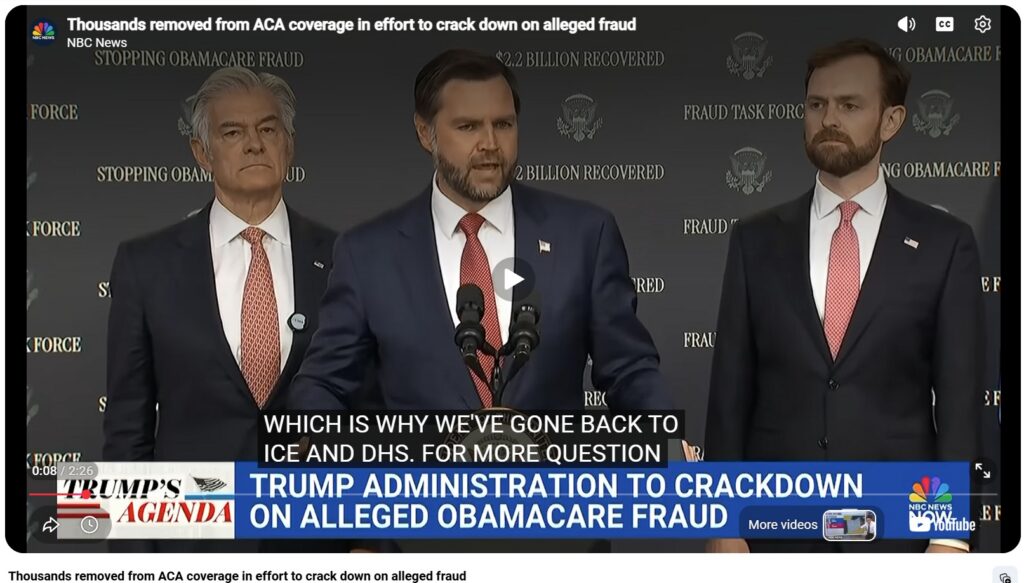
Those figures are significant, but the announcement leaves basic questions unanswered. When do the cancellations take effect? Were the affected records duplicate accounts, incomplete applications, eligibility errors, or intentional misrepresentations? What notice and appeal rights do affected families have?
Unauthorized Enrollment Is Not Automatically Fraud
Fraud is a serious allegation. In general, it requires intentional misrepresentation for financial gain—not merely a mistake, missing document, unresolved data match, or duplicate account. The federal announcement describes alleged fraud, but it does not establish that every canceled enrollment resulted from fraudulent intent.
Duplicate accounts can arise for ordinary reasons. A consumer may lose access to an old account, forget a password, or create a new application without realizing that an earlier record remains active. That can create administrative problems, but it does not necessarily mean the consumer or agent intended to obtain two subsidies.
If an enrollment was invalid and a health plan received advance tax credit payments for it, those payments must be reconciled and the coverage record corrected. The public still needs a clearer breakdown of what caused the cancellations and whether the affected consumers can challenge the decision.
Why Are Health Plans Part of the Investigation?
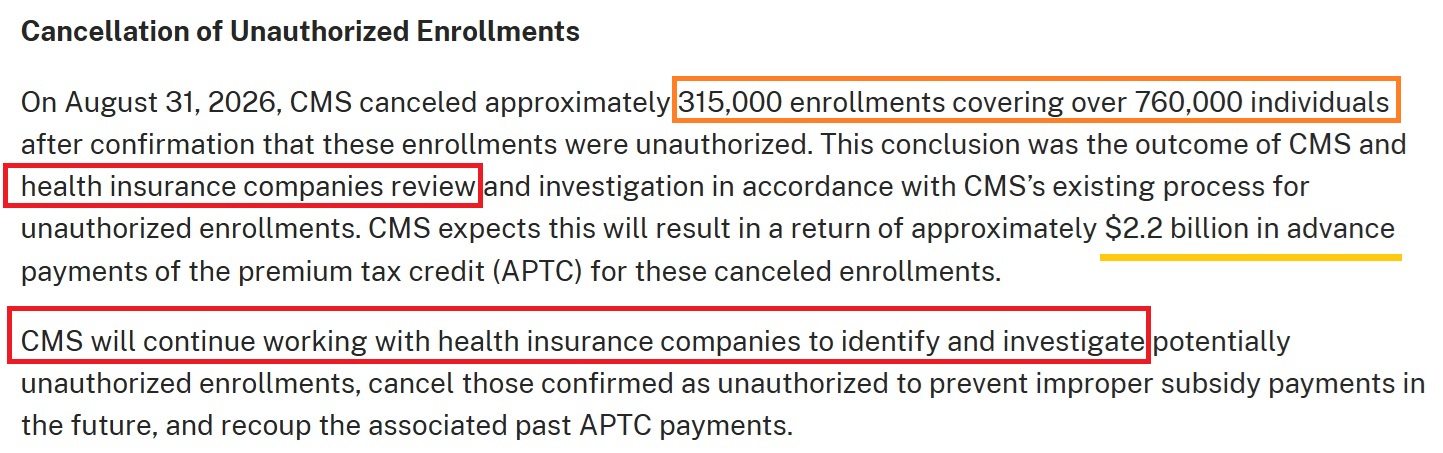
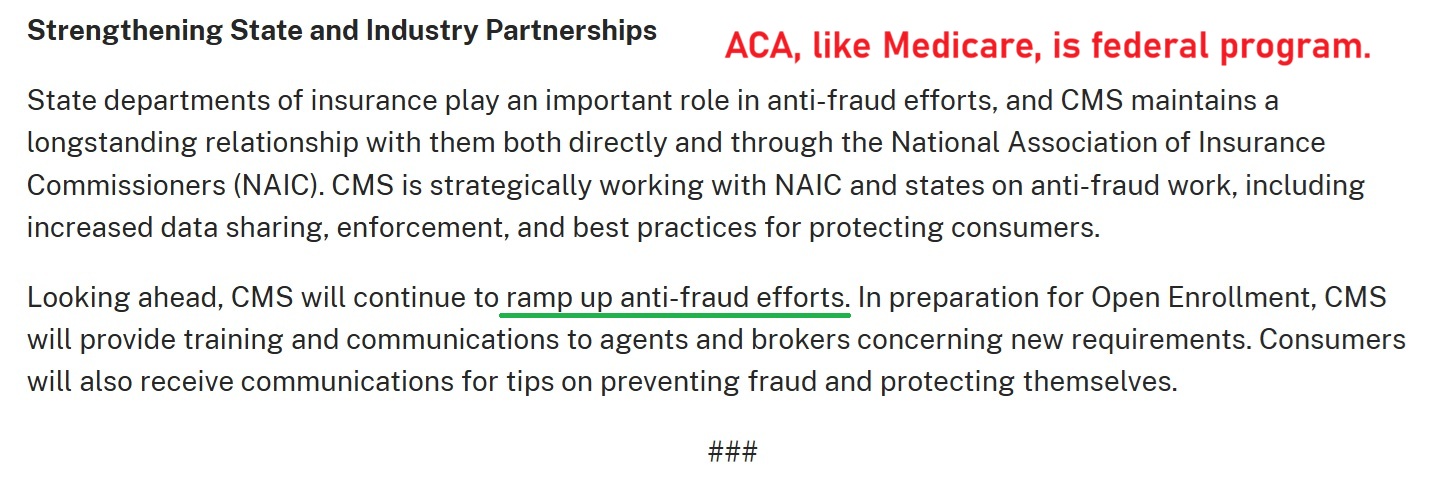
CMS repeatedly says it is working with health insurance companies to identify and investigate questionable enrollments. Cooperation may help reconcile enrollment and payment records, but the scope of that collaboration should be transparent. Consumers deserve to know what information is being shared, for what purpose, and under what privacy safeguards.
Health plans receive enrollment data and advance premium tax credit payments from the Marketplace, then collect any remaining premium from the member. Because insurers are direct recipients of federal subsidy payments, they also have a financial and administrative role in correcting invalid enrollments. That makes clear privacy boundaries and independent oversight especially important.
Agents, Brokers, and the Complexity of ACA Eligibility
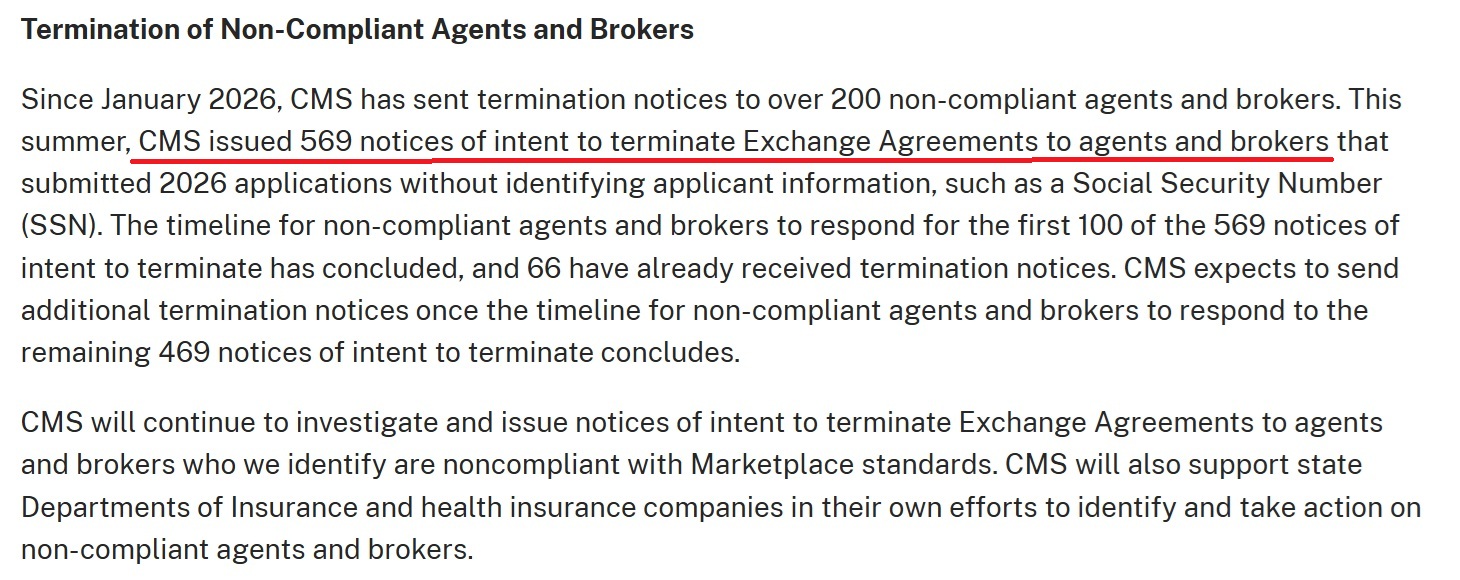
CMS also reported sending termination notices to more than 200 agents and issuing 569 notices of intent to terminate Marketplace agreements with agents and brokers. There are undoubtedly agents who should not be handling ACA enrollments, but many errors can also result from the complexity of the rules and inadequate training.
Eligibility can turn on Medicare or Medicaid status, household composition, immigration documentation, income verification, and the correct use of a special enrollment period. For example, a person who is eligible for premium-free Medicare Part A generally cannot receive ACA premium subsidies. That person may still need to appear on a household application with a younger spouse, even though only the spouse enrolls with financial help. A new agent who does not understand that distinction can create an improper enrollment without intending to commit fraud.
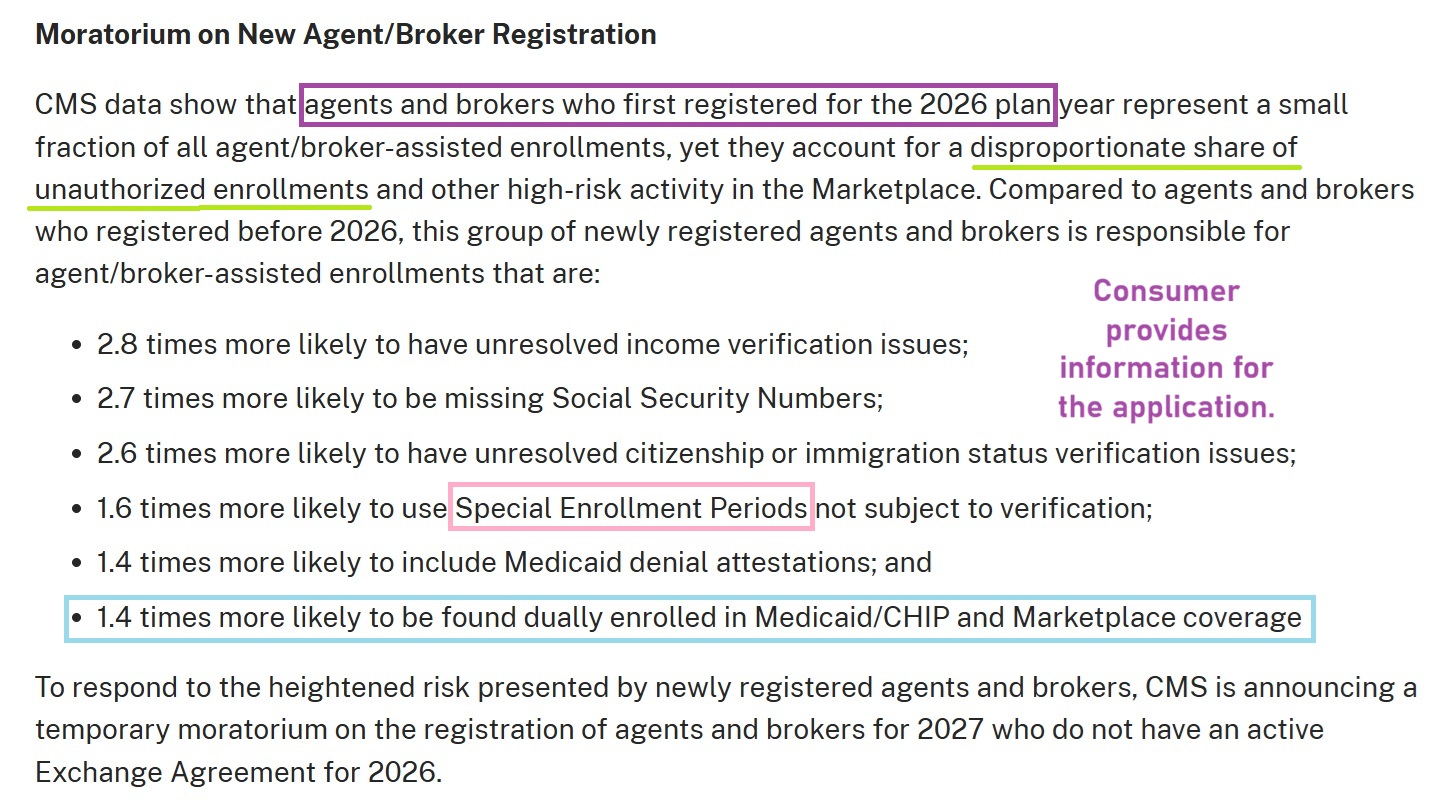
CMS said agents who first registered for the 2026 plan year represented a small share of Marketplace agents but a disproportionate share of unauthorized enrollments. The fact sheet also linked newer agents with higher rates of unresolved income, Social Security number, citizenship, immigration, special-enrollment-period, and Medicaid eligibility issues. Those patterns may identify a training and system-control problem as much as an enforcement problem.
Covered California Already Uses Stronger Front-End Checks
In my experience, Covered California performs extensive eligibility and identity checks during the application process. Social Security numbers, immigration documents, and other information may be matched against government data. When citizenship or immigration information cannot be verified immediately, the consumer may receive a reasonable opportunity period to submit documents. Medicaid eligibility is also coordinated with California’s Medi-Cal system.
These controls are not perfect. Consumers can be incorrectly identified as Medi-Cal eligible and may need county assistance before receiving Covered California subsidies. Still, California’s integrated process shows that many problems can be caught before a plan is activated or a subsidy is paid.
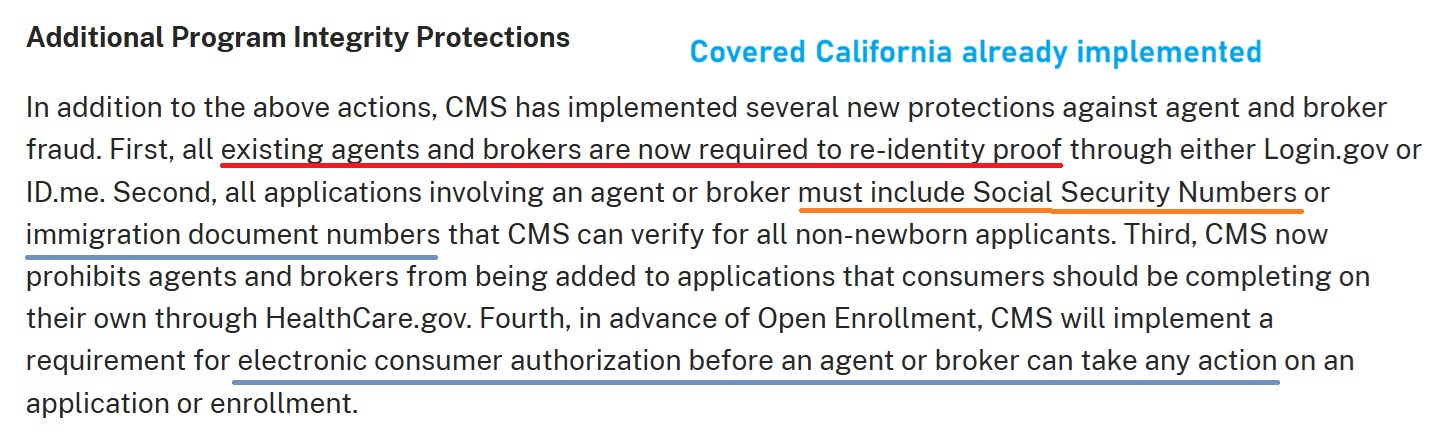
If HealthCare.gov cannot reliably verify Medicare, Medicaid, identity, or immigration information across participating states, that is a system-design problem. Federal officials should explain which checks failed, why they failed, and what will change before blaming consumers and agents for every improper record.
Who Has a Financial Incentive?
Health plans receive the largest direct payments associated with ACA enrollment because premium tax credits are sent to the insurer each month. Reputable carriers do not want payments tied to invalid coverage, but their central financial role is one reason the reconciliation process deserves scrutiny.
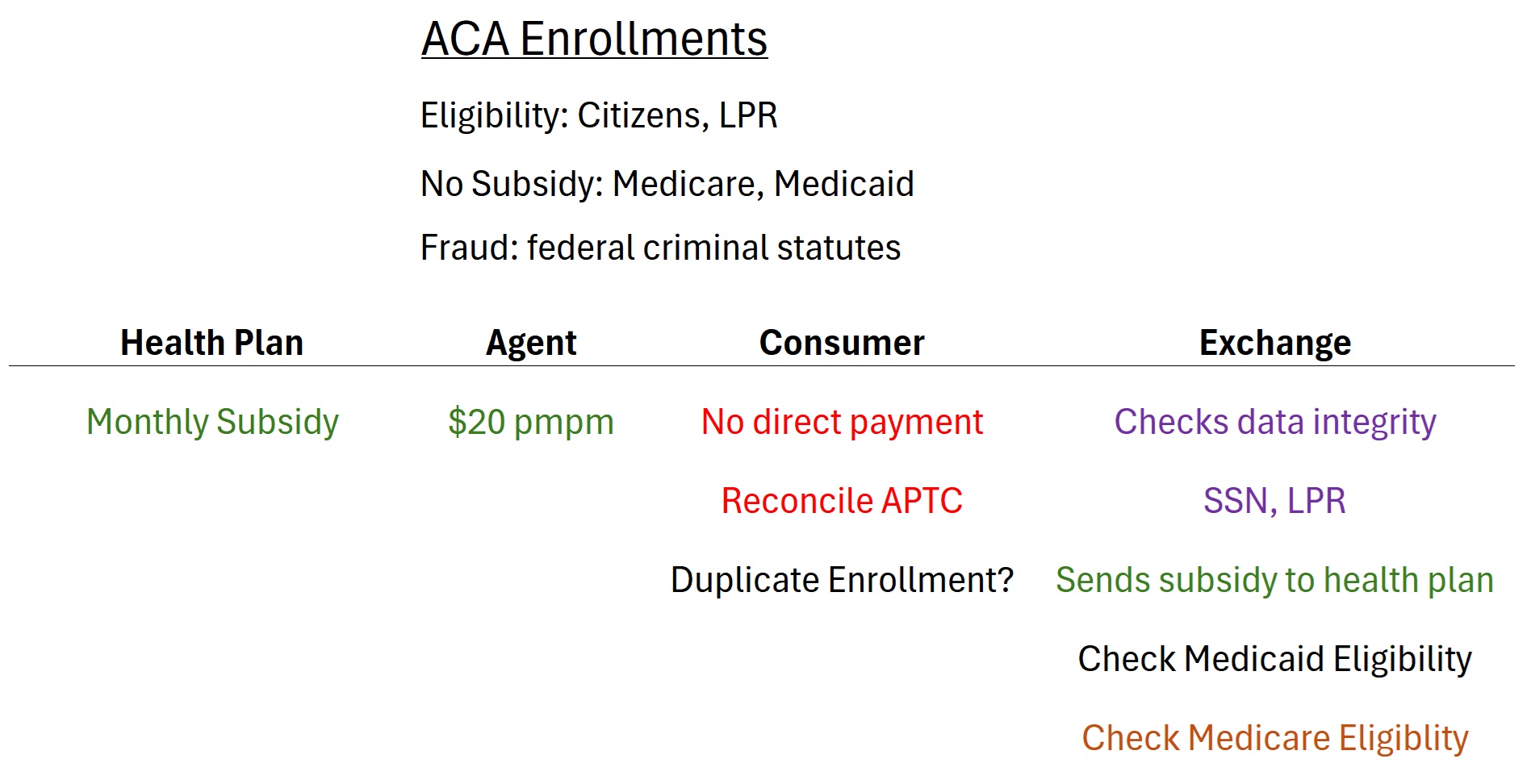
Agent compensation is far smaller. In California, commissions may be around $20 per member per month on the high end, and some plans pay closer to $12. An agent would have to create many improper enrollments to generate substantial revenue while risking termination, license discipline, repayment, and possible prosecution. That does not eliminate misconduct, but it makes broad claims about agent-driven fraud less convincing without detailed evidence.
Consumers do not receive the tax credit as a cash payment. The subsidy is paid to the insurer on their behalf. If household income increases or the consumer receives more assistance than allowed, part or all of the excess may have to be repaid when federal taxes are filed. Duplicate subsidized enrollments can also produce multiple Form 1095-A statements and a difficult tax reconciliation. Those consequences create a financial disincentive for consumers to maintain inaccurate enrollment information.
Questions CMS Still Needs to Answer
- How many cancellations involved duplicate accounts rather than intentional misconduct?
- Which states had the most affected enrollments?
- How many cases involved unresolved documents, Medicare or Medicaid eligibility, or inaccurate income information?
- What notice, appeal, reinstatement, or special-enrollment rights are available to affected consumers?
- What information did health plans share with CMS, and what privacy protections governed that exchange?
- Why did HealthCare.gov’s existing controls not prevent these enrollments before subsidies were paid?
Improve the Marketplace Before Labeling Mistakes as Fraud
Program integrity matters. Agents who intentionally falsify applications should be removed, and deliberate fraud should be investigated through established legal processes. But federal officials should not use the word fraud as a catch-all for duplicate accounts, unresolved verification issues, poor training, disconnected databases, or weak software controls.
The available information points to practical reforms: improve HealthCare.gov’s identity and eligibility verification, strengthen data coordination with state Medicaid programs, provide better training for new agents, give consumers clear notice and appeal rights, and publish a transparent breakdown of canceled enrollments.
Before canceling coverage for hundreds of thousands of people, CMS should show what went wrong and distinguish intentional deception from administrative error. Until then, the federal government has not provided enough detail to support sweeping claims of widespread consumer or agent fraud.
YouTube video on ACA cancellations.