

The health plan cost comparison worksheet may help individuals determine which insurance plan will save them the most money. The worksheet takes your monthly plan premiums and your expected health care utilization to estimate the annual costs. You can then compare which plan design may save you the most money.

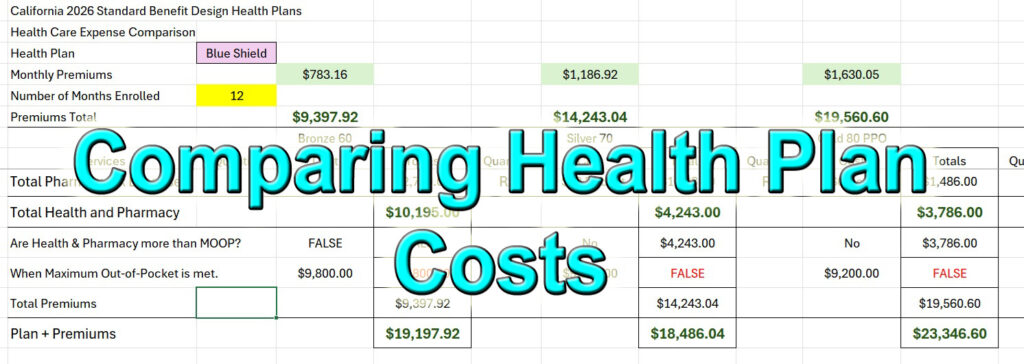
Comparing Costs of 2026 California Health Plans
The health plan cost comparison worksheet for 2026 uses California standard benefit design Bronze 60, Silver 70, Gold 80 and Platinum 90 health plans. Several of the most used health care services are included on the worksheet. The cost of some health care services such as an outpatient procedure must be estimated by the user.

The worksheet accounts for deductibles when they may be triggered by a health care service or prescription drug. For example, the Silver 70 medical deductible applies to hospitalization. If the deductible is met, the dollar amount is added and coinsurance for the included in the subtotals. The worksheet also accounts for tier 4 maximum amount of $250 if the drug costs more under the coinsurance of the health plan.

Beyond the scope of the worksheet is calculating if Bronze 60 tier 2 through tier 4 are limited to a $500 maximum. Consequently, it is possible that the pharmacy drug costs under the Bronze plan are overestimated.

Calculates Maximum Out of Pocket Amounts
If the calculated cost of health care services and pharmacy prescriptions exceeds the maximum out of pocket amount (MOOP), the maximum liability is used to estimate the annual cost. The MOOP is added to the annual premium costs to provide the total cost of the health insurance.

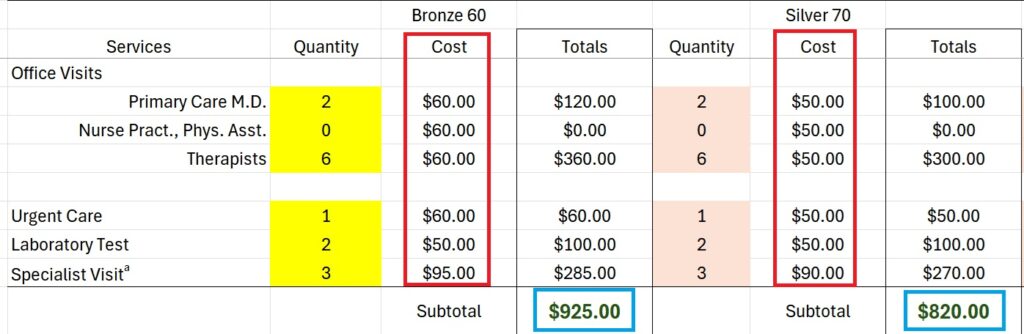
There are two extra column comparisons for Gold and Platinum HMO plans. These plans have lower costs for outpatient and hospitalization. The Gold HMO and Platinum HMO plans use copayments instead of a coinsurance percentage. For hospitalization, you will need to enter the number of days of the hospital stay.

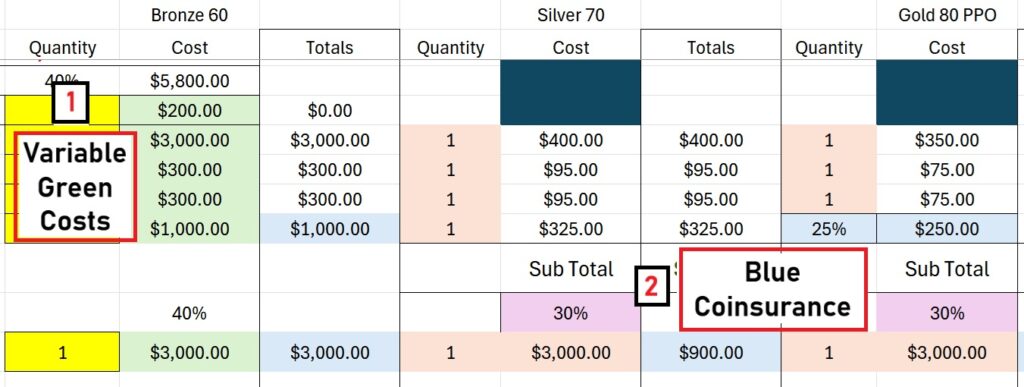
Copayments, Coinsurance, Deductibles Included
Even though the worksheet is based on the standard benefit design, you should always consult the summary of benefits for the specific health plan to confirm coinsurance percentages or copayments. For example, Kaiser offers a Gold HMO coinsurance plan and a Gold HMO copayment plan. The coinsurance plan as coinsurance percentage like the PPO and EPO plans. The Kaiser Gold HMO copayment plan is more expensive because your costs are usually lower for outpatient procedures and hospitalizations.


The health plan cost comparison worksheet is not perfect. If you find an error, please let me know. I will update the worksheet with corrections and improvements. Do not rely solely on the worksheet to select a metal tier health plan. You need to consider past and expected future health care utilization to make the best educated decision on a health plan.


The download for the Health Care Cost Comparison worksheet is no cost. You will not be tracked. There are codes that spy on how you use the worksheet. It’s just a simple Excel spreadsheet. I have made the worksheet available to anyone who wants to use it. I make to guarantees as to the accuracy of the worksheet. It is meant as resource to provide additional insight and information for your final health insurance plan selection.
Health Care Cost Comparison 26_1
Metal tier health plan health care and pharmacy prescription cost comparison worksheet for California standard benefit design plans.
YouTube video reviewing the health plan cost comparison worksheet.


Steps
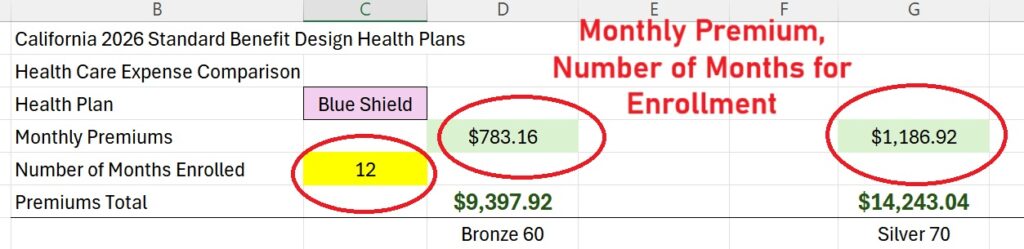
- Find the monthly premiums for your health plan either through Covered California or direct from the health plan.
- Enter the dollar amounts in the green cells. Enter the number of months of enrollment if less than 12 months.
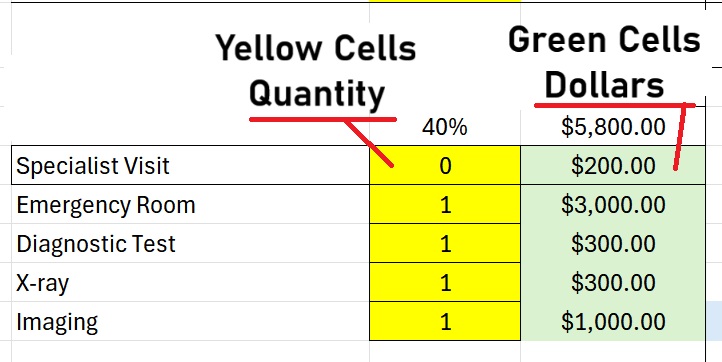
- The yellow cells are for entering the quantity of services or prescription drugs. The green cells are for the estimated dollar cost of the service or drug if it is not subject to a set copayment.
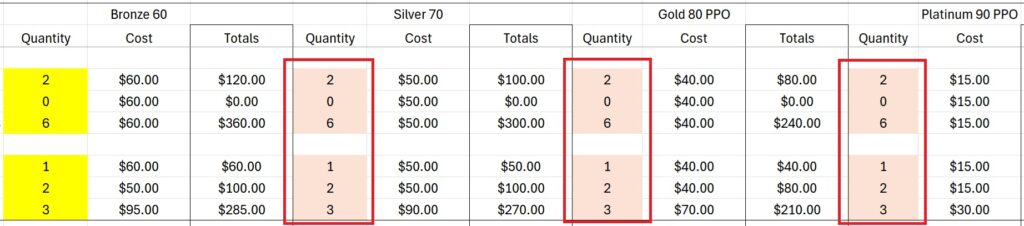
- The quantity entered in the yellow cells will populate across the different metal tier health plans.
- The worksheet will automatically subtotal certain sections.
- The blue cells indicate the dollar amount of the service is subject to a coinsurance percentage. For example, the Gold plans apply 25 percent coinsurance to the cost of imaging like an MRI.
- If a health care service or pharmacy prescription is subject to a deductible, it will be noted. If the cost exceeds the deductible, the condition will be true and costs over the deductible amount will be subject to the coinsurance percentage of the health plan.
- Some drug costs are limited by the plan. Silver – Platinum plans limit tier 4 drugs to a maximum of $250 for a 30-day supply. Adjustments are included in these plans to lower their total costs. The Bronze plans are limited to $500 maximum for tier 2 – 4. The worksheet does not account for the possible Bronze maximum limit but does note if the condition may be true.
- If the health care and pharmacy cost totaled together exceed the maximum out of pocket amount of the plan, the MOOP is triggered. Instead of totaling the cost of health care and pharmacy, the worksheet will add the MOOP to the total premium amount for the total cost.
- The two right columns are for Gold HMO and Platinum HMO plans. These plans have copayments in place of coinsurance for many health care services. For hospitalization, you will need to estimate the number of day of the hospital stay (yellow cell) to get a cost estimate.