All of the carriers offering individual and family plans in California must develop specific rate sheets for all the plans they offer. The rate sheets detail the specific monthly health insurance premiums by age. I try to post the rate sheets for the carriers when they are released. Unfortunately, not all of the carriers make their rate sheets or rate books easily accessible.

Health Insurance Rate Sheets Explained
The first age band is from ages 0 to 14. Individuals in this age range receive the same rate for the same plan in their specific region of enrollment. California has 19 different rating regions.

The maximum rate is for a 64-year-old. Between the ages of 14 and 64, the monthly health insurance premium will increase by 1 to 5 percent.

Rate Sheets Show All Plans by Age and Region
The rate sheets for the carriers will show all the plans offered in the region. Some of the plans are not offered through Covered California. We call these non-standard benefit design plans, also denoted as off-exchange. The non-standard design plans still maintain the actuarial level of the metal tier. However, the member cost-sharing (deductible, copays, coinsurance) may be slightly different.
The result is that the off-exchange plans are usually slightly less expensive than the standard benefit metal plans offered through Covered California. If you will never be eligible for a subsidy through Covered California, considering an off-exchange plan is advisable.
Silver 70 Off-Exchange Plans Less Expensive
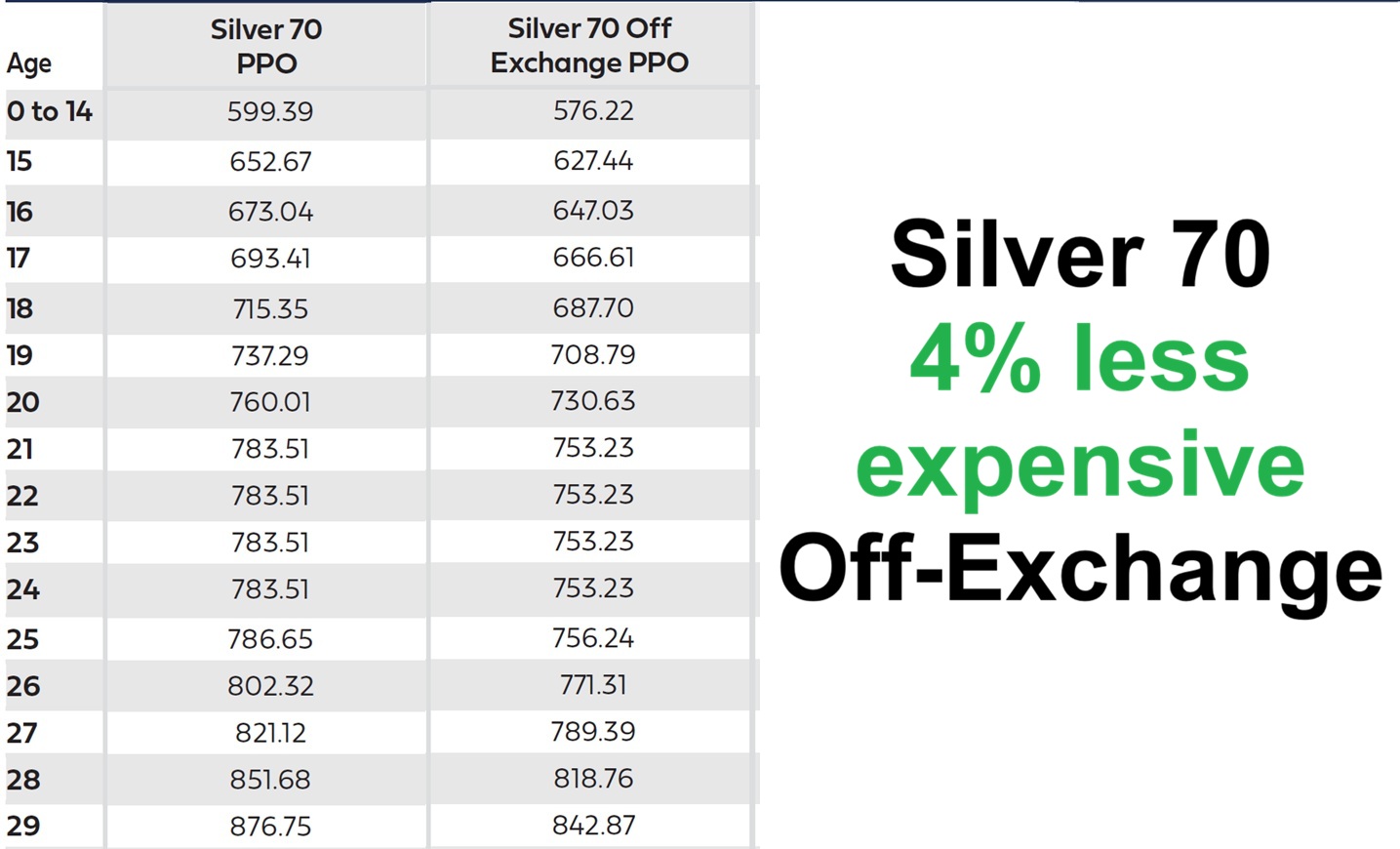
A specific example is the Silver 70 Off Exchange plan that is a near mirror image of the Silver 70 plan. The Silver 70 OE will usually be 4 to 5 percent less expensive off-exchange. The extra premium added to the Covered California Silver 70 plans is used to fund the cost sharing reductions of the enhanced Silver 73, 87, and 94 plans.
All Silver Plans Have the Same Rate?
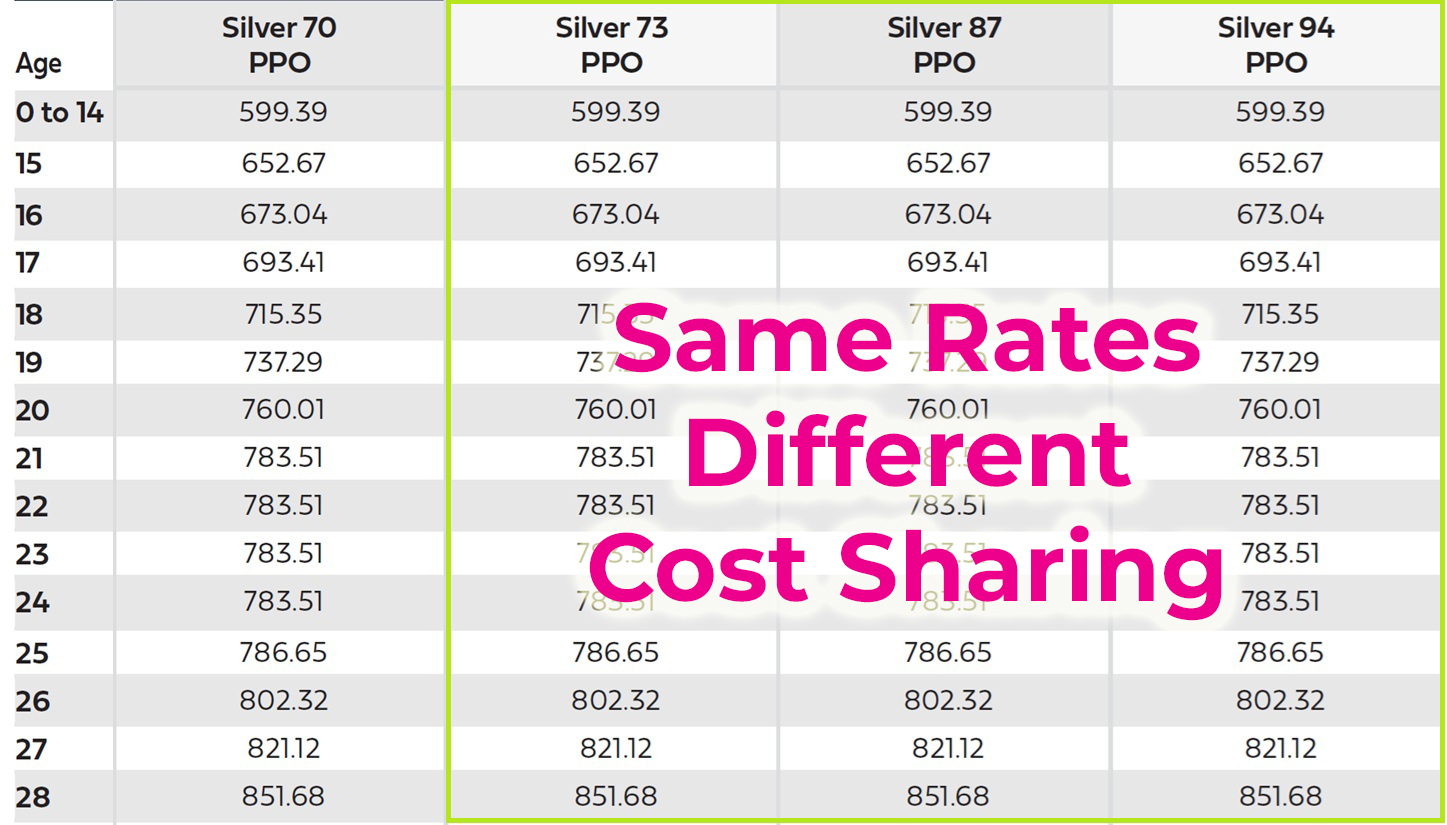
When you look at the Silver 70, 73, 87, and 94 plans offered through Covered California you will notice they all have the exact same rate. Of course, if you are eligible for a Silver 73, 87, or 94, you will receive a substantial Advance Premium Tax Credit subsidy to lower the monthly health insurance premium. Your cost sharing (deductible, copays, coinsurance, maximum out of pocket) will be lower with one of the enhanced Silver plans.
Annual Increase by Age from the Rate Sheets

A condition of the ACA is that the rate for a 64-year-old can be no more than 300 percent of a 21-year-old adult. All of the plans and corresponding rates will reflect the maximum full premium rate amount for the same plan in the same region.
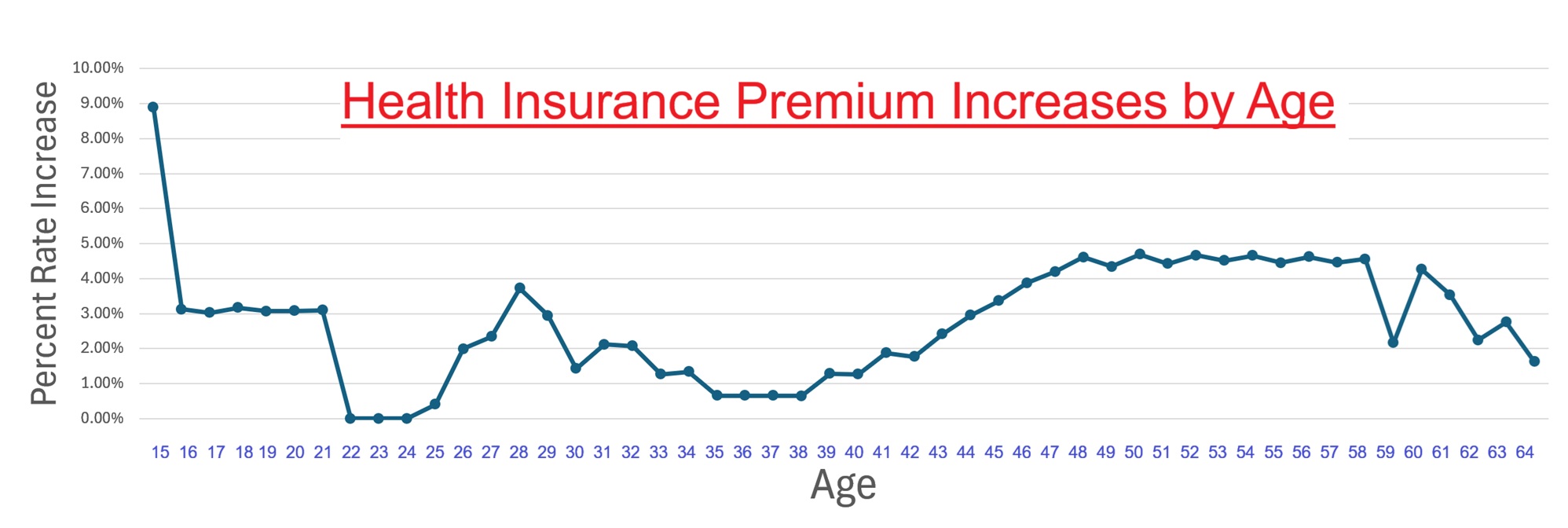
However, the percentage rate age increase is not a straight line. The carriers use a formula to increase the premiums between ages. Consequently, between the ages 16 and 17, there is a 3 percent rate increase. Interestingly, there is no age increase between the ages of 22, 23, and 24. Then the increase spikes in your late 20s, which is usually the time many people are starting families.
The percent rate increase, year over year, fluctuates between 1 and 2 percent into your early 40s. In your late 40s, the rates will increase on average between 4 and 5 percent, then trails off as we get into our 60s. In this manner, the carriers are able to achieve the maximum 300 percent rate of a 21-year-old at age 64. This graph of percentage increase seems consistent across all of the carriers offering health insurance in California.
YouTube video reviewing the rate sheets.