Without an extension of the enhanced subsidies of the Affordable Care Act, older Americans will be hit the hardest by high health insurance rates. The prime culprit is that there are no Affordable Care Act health insurance subsidies for incomes over 400 percent of the federal poverty level. This leaves older Americans potentially paying over 30 percent of their household income on health insurance premiums.

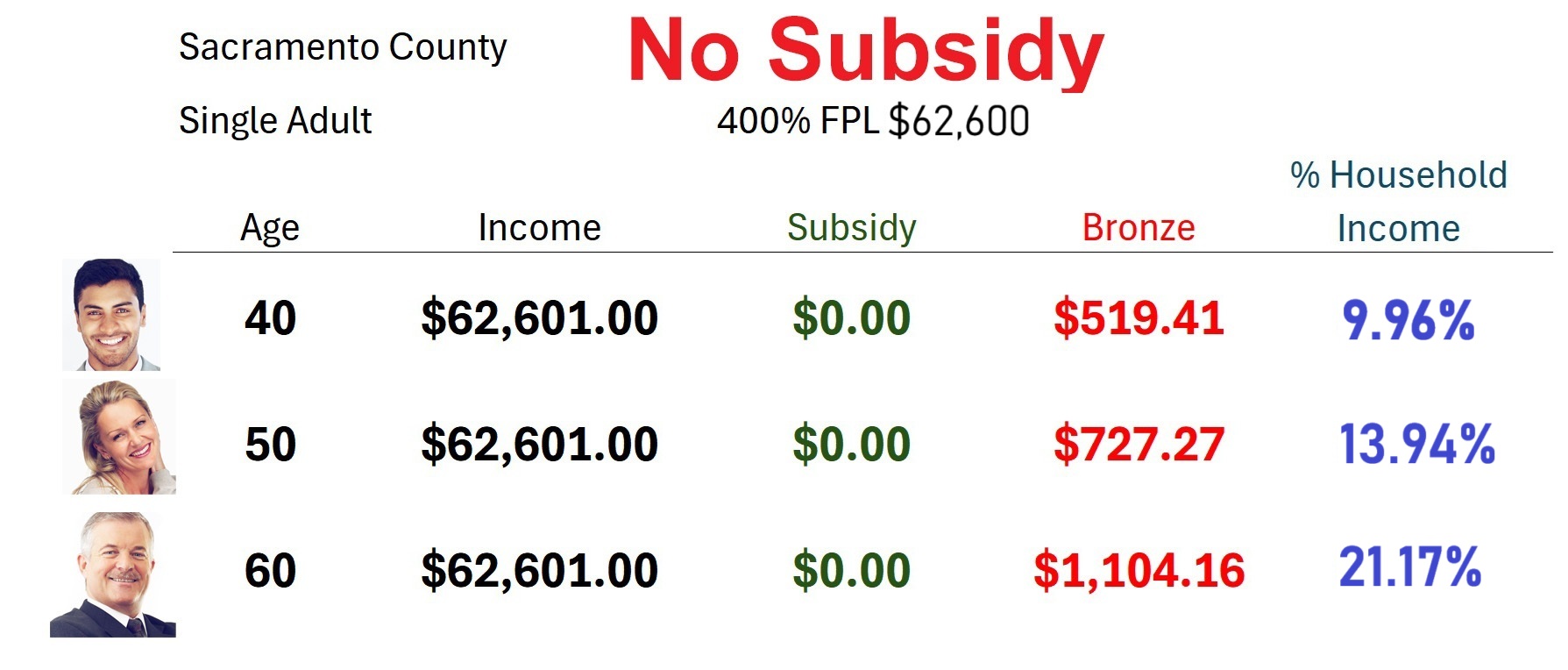
For a single adult, 400 percent of the federal poverty level is $62,600. If the income is $1 over the limit, the individual receives no subsidy for their health insurance premium. In this example, three individuals, ages 40, 50, and 60, have an income $1 under the 400 percent threshold. They each receive a subsidy to lower the annual cost of the lowest priced Bronze plan to under 10 percent of their household income.

Older Americans Crushed by High Health Insurance Premiums
If these same individuals have an income $1 over $62,600, there is no subsidy. The lowest priced Bronze plan in Sacramento County for a 60-year-old equates to over 20 percent of their household income. The monthly health insurance premium jumps from $270 to $1,104 just because of a $2 increase in the household income.
Under the enhanced health insurance subsidies from 2021, households could earn over 400 percent of the federal poverty level (FPL) and still receive a subsidy. Without an extension to the enhanced ACA subsidies, all subsidies cease if the income is over 400 percent. This means that if a family estimated their income at 300 percent of the FPL, but the income on their federal tax return is $1 over the 400 percent threshold, they must repay ALL the subsidies they received during the year.
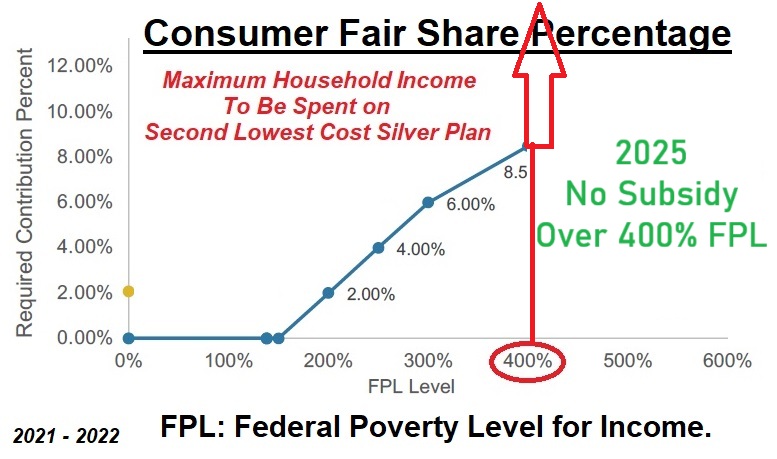
The ACA subsidies are calculated to make the second lowest Silver plan a certain percentage of the household income. The subsidies for older Americans are larger than younger individuals at the same income level because the health insurance rates are higher for older Americans.
Rates Higher for Older Americans
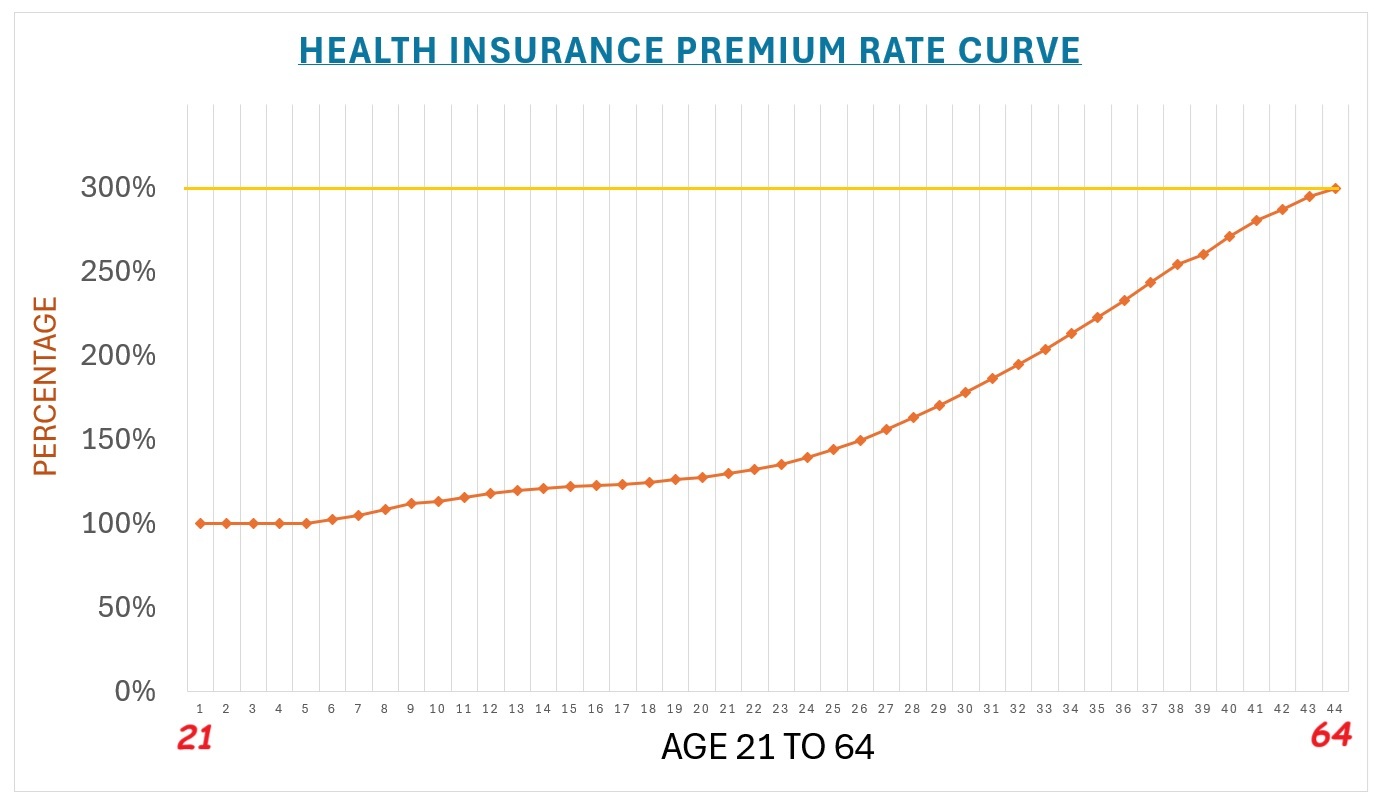
The monthly rates for a 64-year-old individual can be no more than 300 percent of the 21-year-old individual. The health insurance rates are not a straight line between ages 21 and 64. The rate increases are weighted more heavily on individuals over 50 because older people use more health care services. While the higher rates help older Americans reduce their health insurance premiums if they receive a subsidy, they have exorbitantly high premiums without a subsidy.
The maximum income eligible for the ACA subsidies – without the enhanced subsidies – for a couple is $84,600. This example is from married couples in Nevada County, a region with high insurance premiums. If the income for the couple is under the 400 percent limit of $84,600, the 60 year old couple get a subsidy of $2,855 to lower their monthly premium to $26.64 for the lowest cost Bronze plan.

No ACA Subsidy means 40% Income Spent on Health Insurance
If these couples make $1 over $84,600, they receive no subsidy. The percent of the household income for the 40-year-old couple jumps to 19 percent. The 50-year-old couple will spend over 25 percent of their income on health insurance premiums. The 60-year-old couple will be spend 40 percent of their income for the lowest cost Bronze plan.

This is the dire situation for the lowest cost Bronze plan. In general, older Americans select a higher priced Silver plan because of the reduce cost sharing for routine services and prescription drug coverage. For the 60-year-old couple, if both or either of them selected a Silver plan, over 50 percent of their income would be spent on health insurance premiums with no subsidy.
For a couple in their fifties and sixties making more than $84,600 annually is commonplace in California. These older Americans have built up their careers, own small businesses, may have retirement income, and also have investment income. They should not have to spend over half their income on health insurance premiums.
The current state of affairs, as of November 2025, is that there are no Affordable Care Act health insurance subsidies for individuals and families with an income over 400 percent of the federal poverty level. Without the enhanced subsidies, health insurance for older Americans is unaffordable.
YouTube video of how older American are hurt by no subsidies.