How updated income limits affect subsidies, Medi-Cal eligibility, passive renewal, and California premium assistance
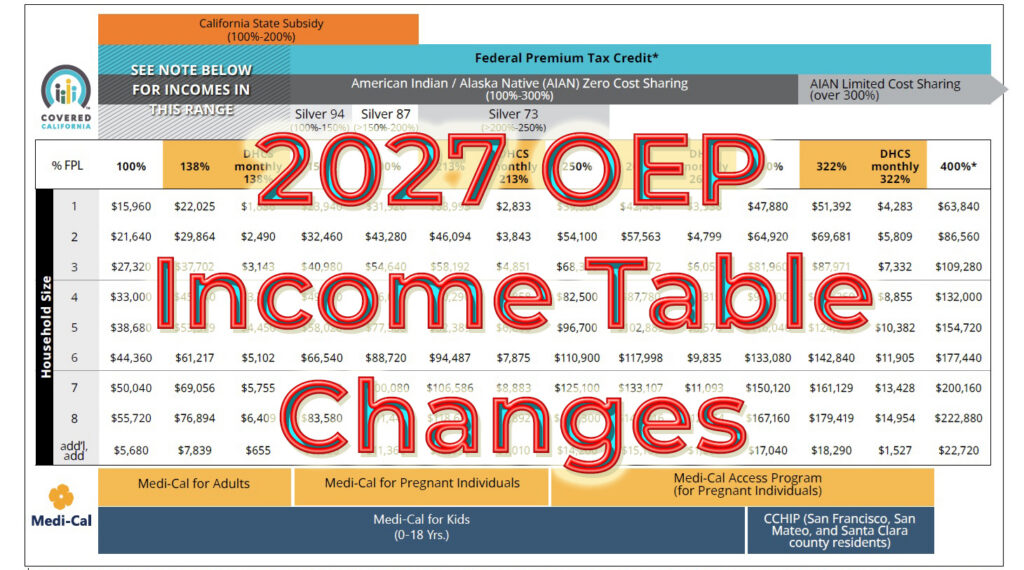
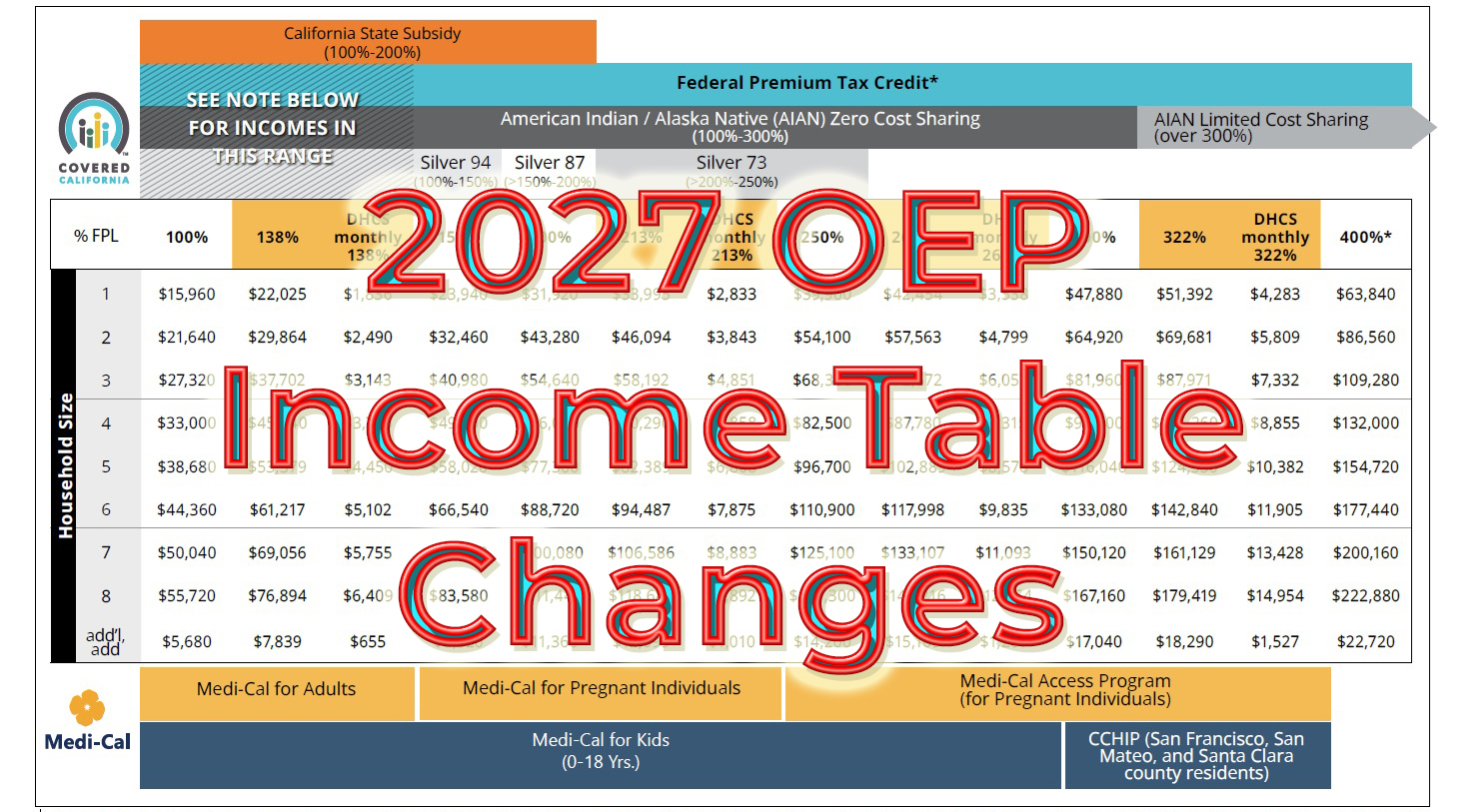
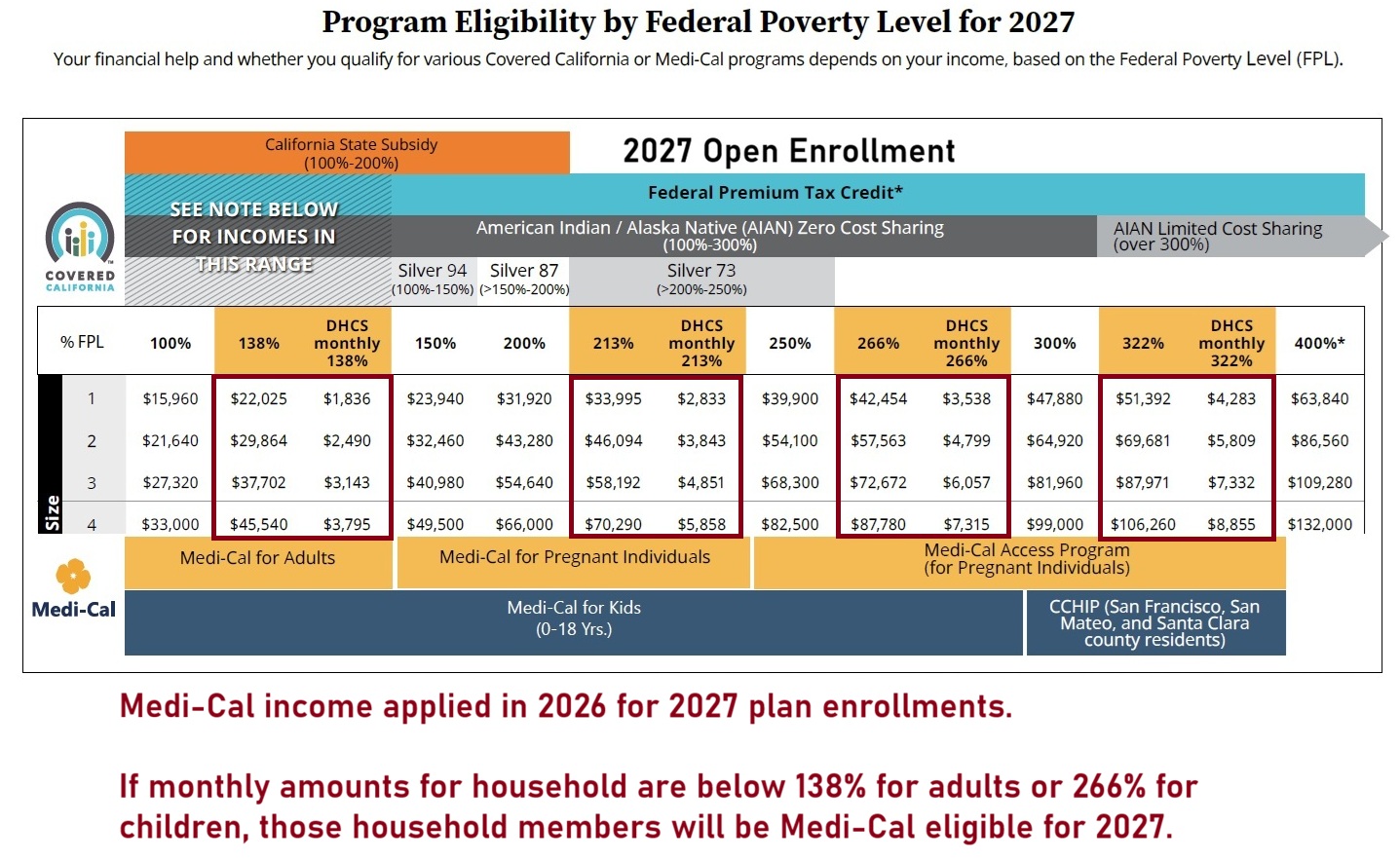
Covered California has released its income table for the 2027 plan year. The table helps determine whether a household may qualify for premium subsidies, enhanced Silver plans, Medi-Cal, or other children’s health coverage programs.
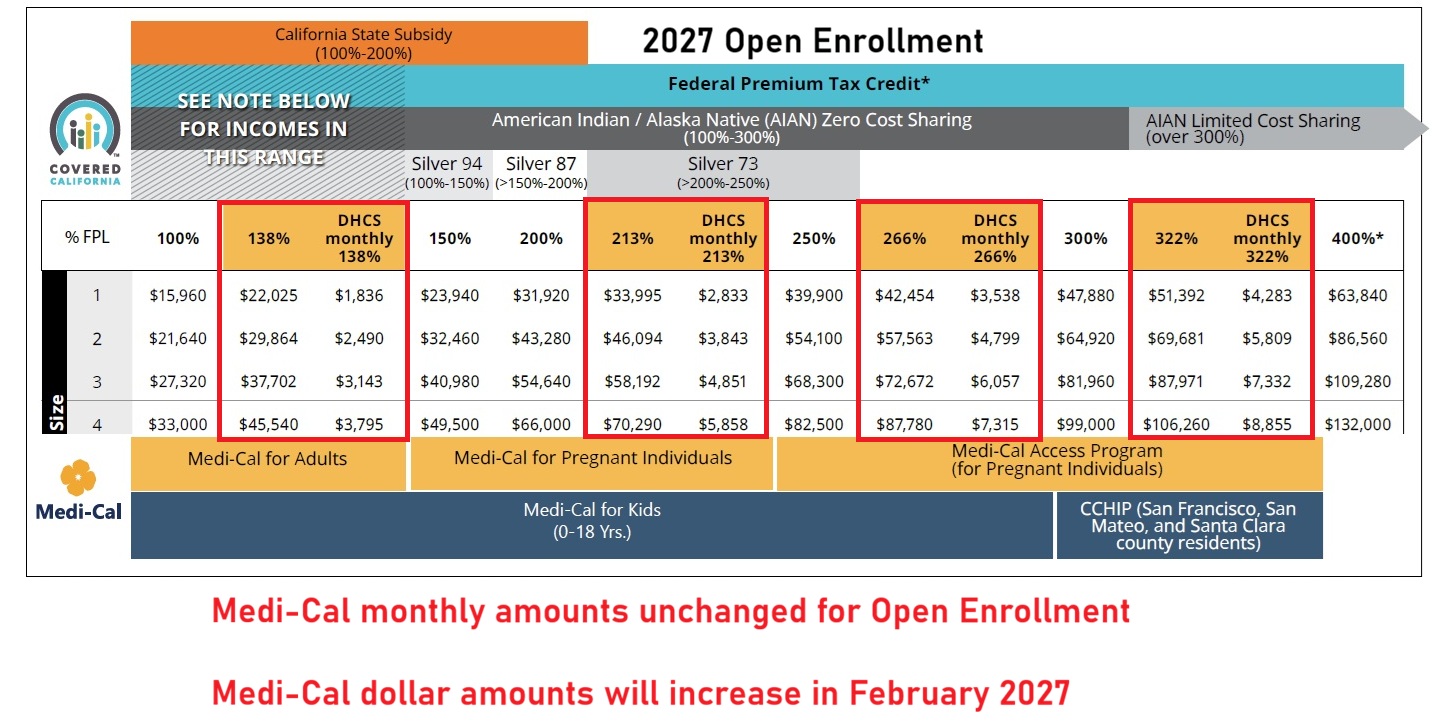
Most 2027 Covered California program thresholds are based on the 2026 federal poverty level and should remain in effect throughout the 2027 plan year. However, Medi-Cal income limits follow a different schedule and are expected to change after the federal poverty level is updated in early 2027.
Important: This article summarizes the October 2027 Open Enrollment income table. Always check the publication date on the official income chart and verify current limits before making enrollment decisions.
Why the 2027 Income Table Matters
The income columns—100%, 150%, 200%, 250%, 300%, and 400% of the federal poverty level—are higher than the comparable 2026 amounts. These percentages correspond to different eligibility rules and assistance programs. In other words, you can earn slightly more money and still qualify for certain programs and subsidies through Covered California.
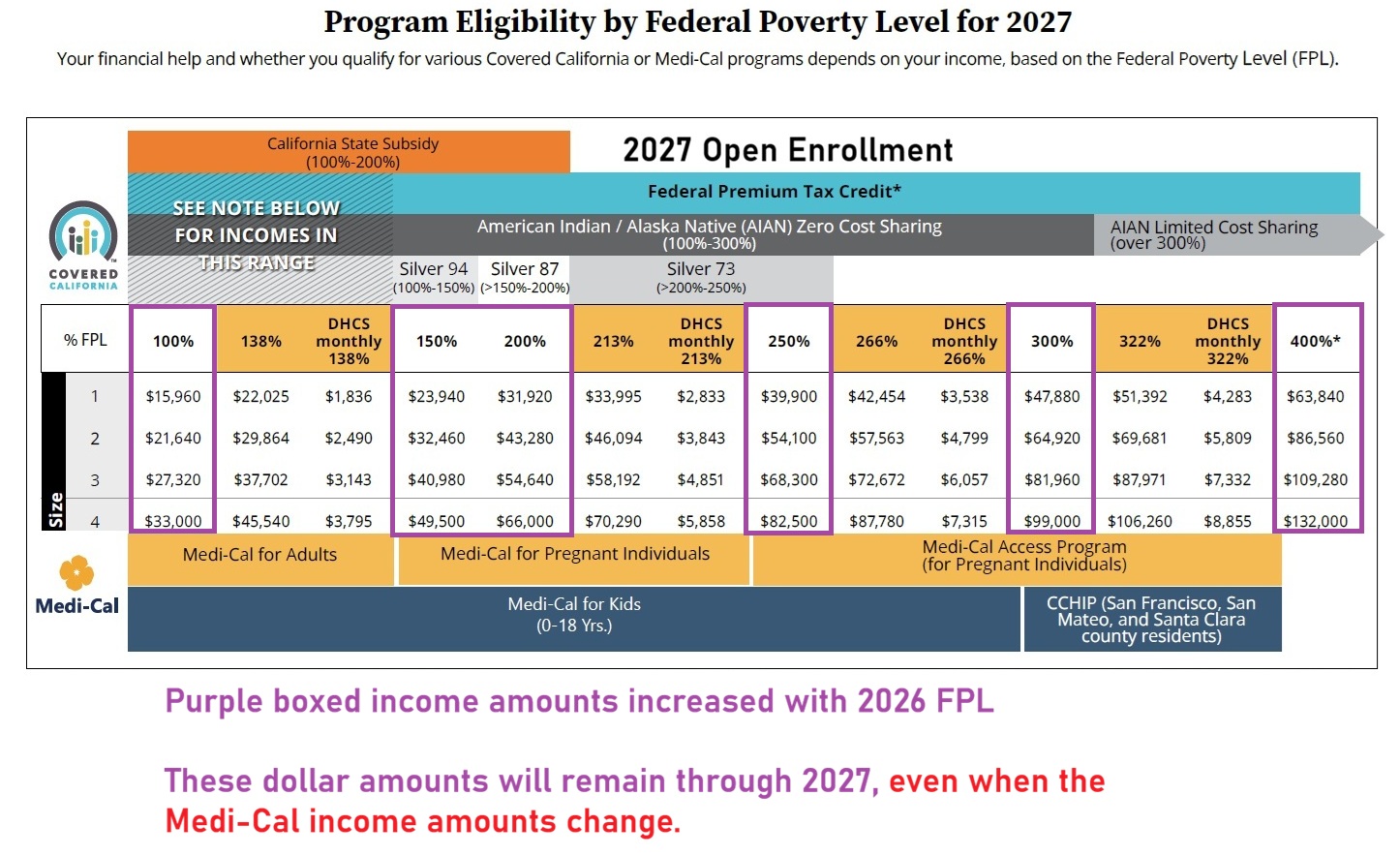
Covered California generally uses a household’s estimated annual income to calculate premium assistance. Medi-Cal, by contrast, generally evaluates monthly income. That distinction can produce unexpected eligibility results, particularly during automatic renewal.
Watch Your Income Before Passive Renewal
Beginning during open enrollment, Covered California may automatically renew consumers who have not actively selected a 2027 plan or updated their account. This is known as passive renewal. If the current plan remains available, the renewal may use the income already stored in the account.
An outdated or unusually low-income estimate can move an adult—or a child—into Medi-Cal. Before passive renewal, review your household size, projected annual income, and current monthly income. Update the account when appropriate rather than assuming last year’s information is still accurate.
Adult Medi-Cal Income Thresholds
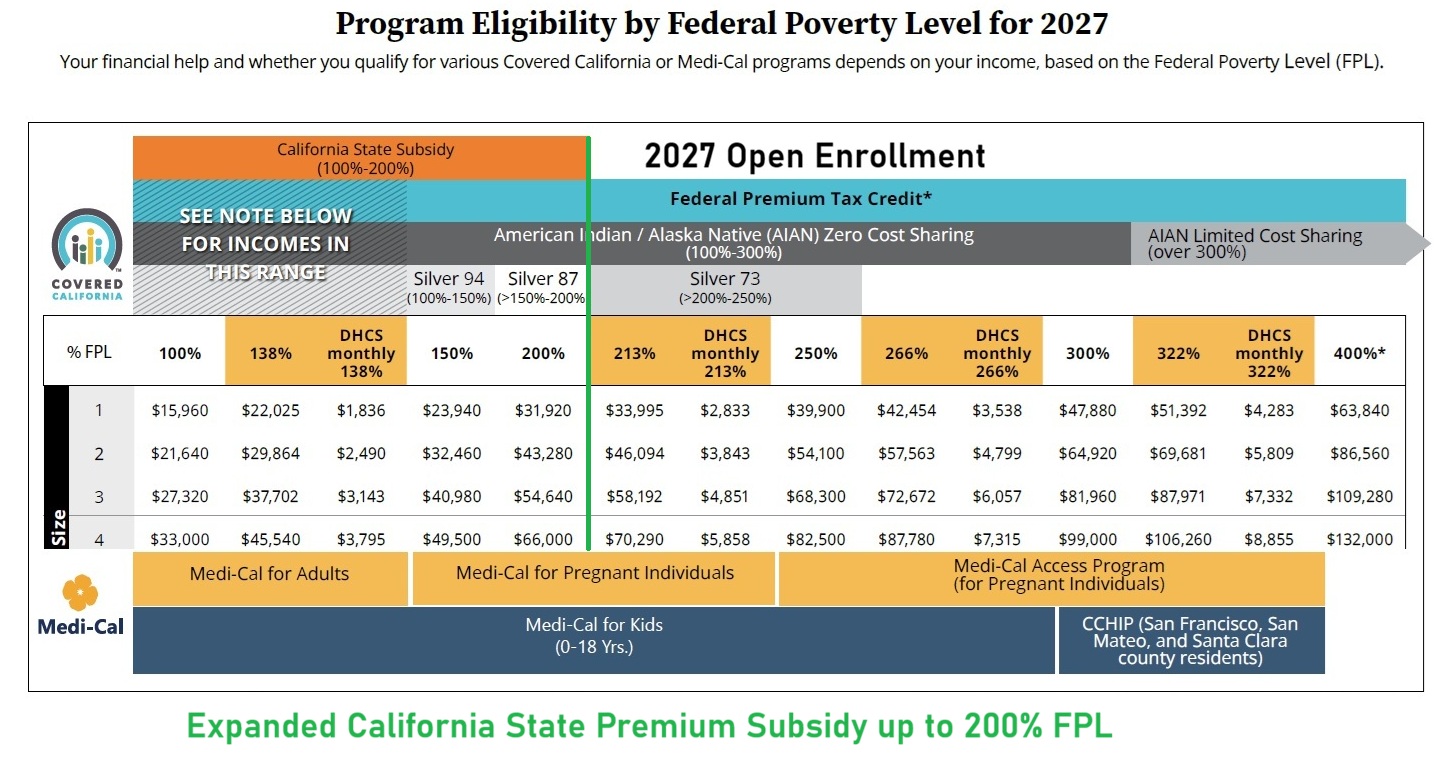
Under the October 2026 income table, a single adult generally needs monthly income above $1,836 to move beyond the adult Medi-Cal threshold and potentially qualify for Covered California premium assistance. For a two-adult household, the monthly income generally must exceed $2,490.
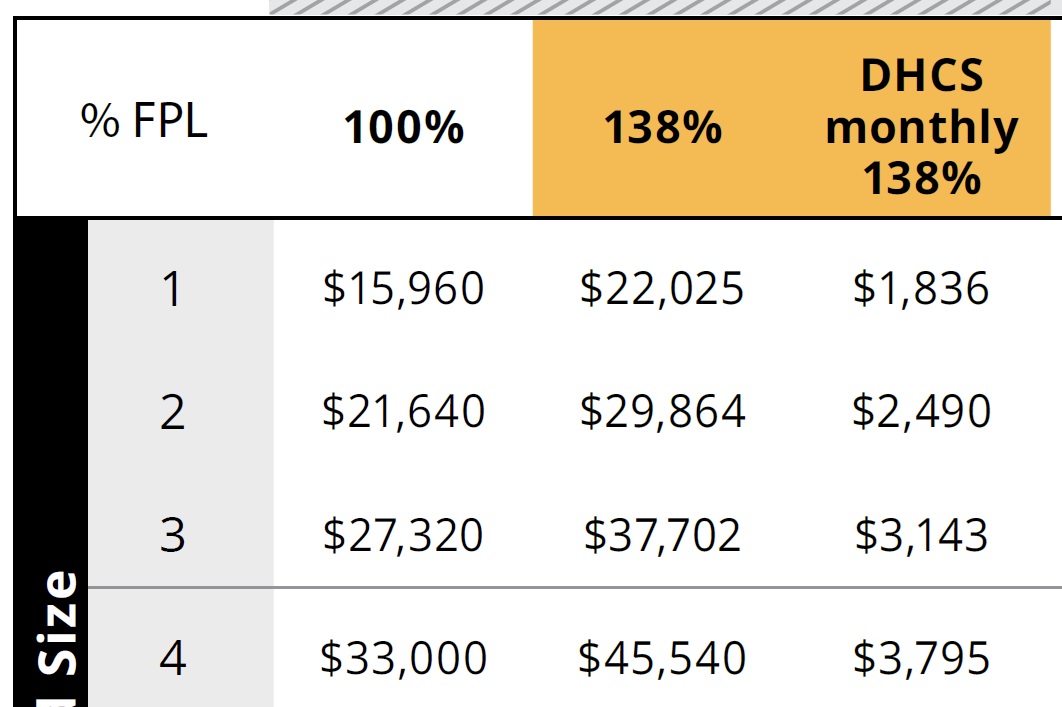
Thresholds rise with household size. Consult the applicable row in the official table for households of three or more.
Income Limits for Children
For dependent children age 18 and younger, the income threshold for subsidized Covered California coverage is higher than the adult threshold. The statewide children’s Medi-Cal limit shown in the table is 266% of the federal poverty level.
- Household of two: Monthly income must be greater than $4,799 for the child to move beyond the stated Medi-Cal threshold.
- Household of three: If the monthly income is under $6,057, the children will be Medi-Cal eligible
- Household of four: Monthly income must be greater than $7,315 to qualify for Covered California subsidies.
Because eligibility depends on household size, locate your household-size row and then follow it across to the applicable program column.
Higher Limits in Certain CCHIP Counties
San Francisco, San Mateo, and Santa Clara counties have County Children’s Health Initiative Program (CCHIP) rules with a higher children’s eligibility limit of 322% of the federal poverty level.
- Household of two: If the monthly income is under $5,809 the child retains Medi-Cal
- Household of three: Up to $7,332 per month.
- Household of four: Up to $8,855 per month.
These monthly limits will increase as household size increases and may change when the applicable federal poverty guidelines are updated in February 2027.
California Expands State Premium Assistance
California is also expanding state-funded premium assistance for 2027. In 2026, the state subsidy applied through 165% of the federal poverty level. For 2027, the income range extends through 200% of the federal poverty level.
The goal is to help lower-income consumers offset higher premium contributions after the enhanced federal subsidies associated with the Inflation Reduction Act expired. The state assistance works alongside the federal advance premium tax credit (APTC) and the standard $1 premium credit.
How the State Subsidy Can Affect Premiums
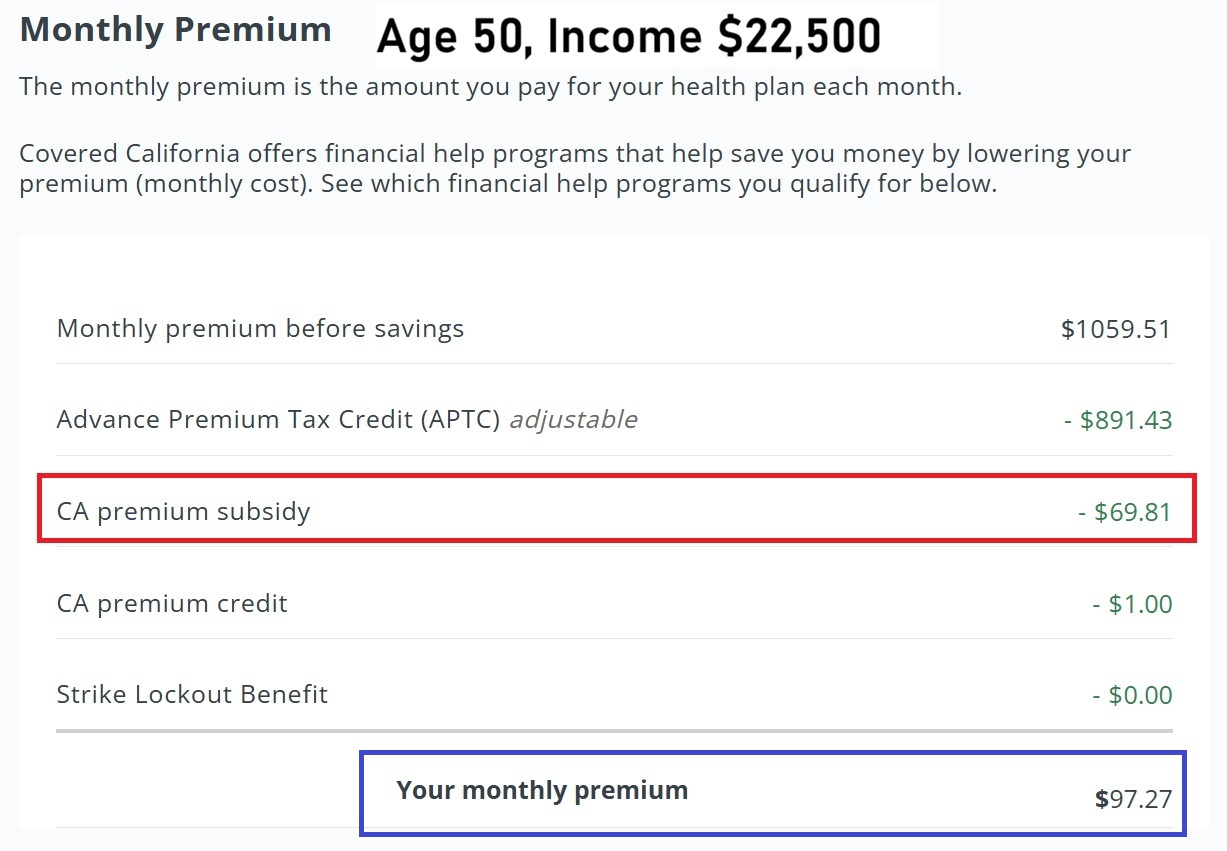
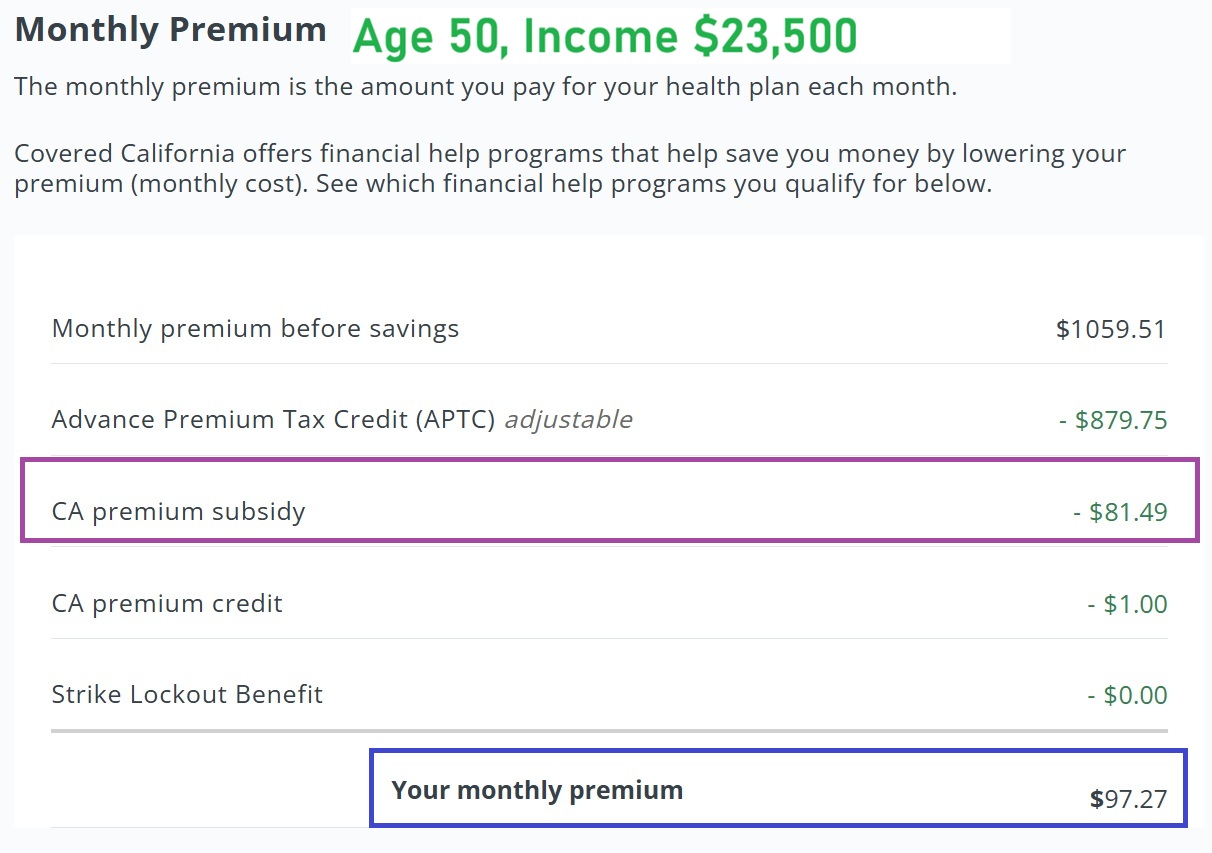
Based on a 50 year old individual at various annual incomes under 200 percent of the federal poverty level.
| Annual income | California premium subsidy | Net monthly premium |
| $22,500 | $69.81 | $97.27 |
| $23,500 | $81.49 | $97.27 |
| $24,500 | $24.47 | $164.65 |
The first two examples show why a small income increase may not immediately raise the consumer’s net premium: the California subsidy can adjust to help keep the premium stable within a qualifying income range. While the federal APTC (premium tax credit subsidy) decreases as the income increases, the California premium subsidy, at certain incomes, increases to keep the net monthly premium consistent. Once income moves into a different assistance band, the consumer’s required contribution may rise.
What to Do Before 2027 Enrollment
- Review the income stored in your Covered California account. Confirm that it reflects your best estimate for 2027.
- Check monthly income when evaluating Medi-Cal. Annual and monthly income rules can produce different results.
- Confirm your household size. Eligibility limits increase with each household member.
- Pay attention to children’s eligibility. Children have higher Medi-Cal income limits, and CCHIP counties have additional rules.
- Do not rely solely on passive renewal. Review your plan, household information, and eligibility before automatic enrollment is completed.
- Use the latest official table. Medi-Cal figures may change after the federal poverty guidelines are updated in 2027.
Bottom Line
The 2027 income table affects more than the amount of premium assistance a household may receive. It can also determine whether adults or children are enrolled through Covered California, Medi-Cal, or a county children’s program.
Updating your income before passive renewal is one of the most important steps you can take to reduce enrollment surprises. If you have questions about the table or how a particular threshold may apply, leave a comment below.
Disclaimer: Income limits and program rules can change. This article is for general educational purposes and is not an eligibility determination. Verify figures with Covered California or the appropriate county agency.
YouTube video on income table review.