Whether you are enrolling yourself or working with a friend or family member you need to gather certain information regarding Medicare to be able to select the correct plan that meets the Medicare beneficiary. This is a Medicare needs analysis or Medicare profile.

Primary residence zip code
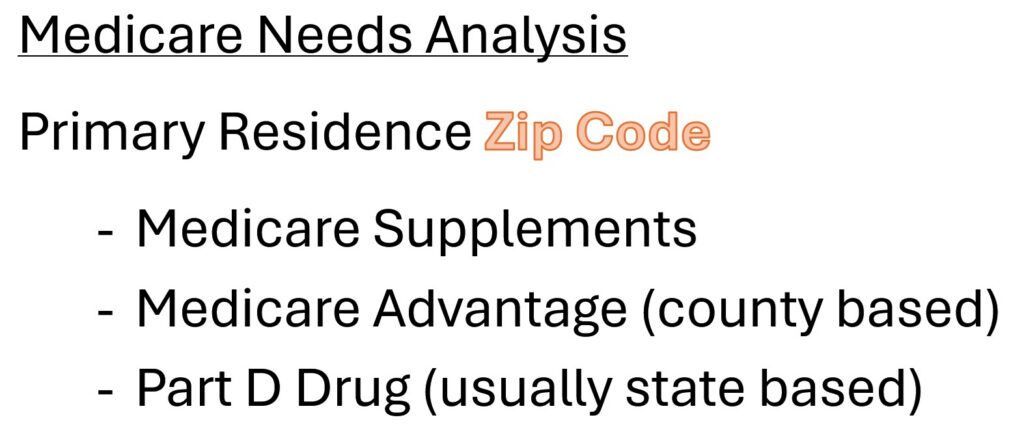
While original Medicare is a giant PPO, other plans like the supplements and the Part D drug plans are all based on the address and the primary zip code for the Medicare beneficiary. It’s really important to know where the person is going to be living most of the time that they’re going to be receiving their services. Medicare supplement rates will be based on one or several counties. Medicare Advantage plans are based on the county of residence and may not be offered in an adjoining county. In most situations Part D drug plans are usually state based.
Medicare beneficiary identification number
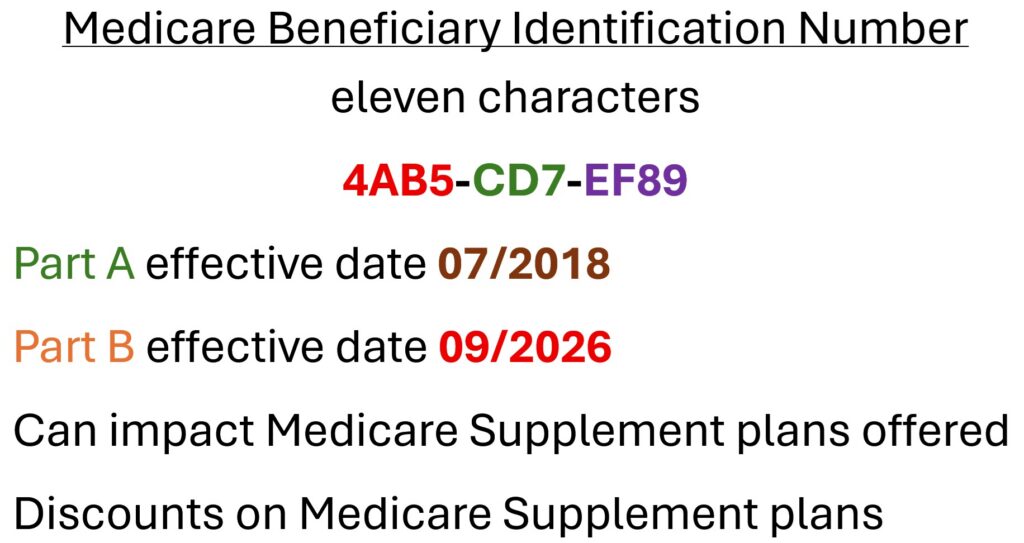
If the Medicare number is off by 1 digit or letter or you have one of the dates wrong, the applications can go sideways really quickly. It is very important to make sure that you have the correct Medicare beneficiary ID number. It will be 11 characters in length and is going to be a mixture of numbers and letters. The Part A effective date is very important and will be separate from Part B. The Part A and B effective dates aren’t necessarily the same month and same year. They can be different especially if someone turned 65 but they continue to work at an employer sponsored plan and then several years later segued into original Medicare. The date of Part B can change what Medicare supplement plans may be offered and the discounts for those Medicare Supplement plans.
Other Coverage
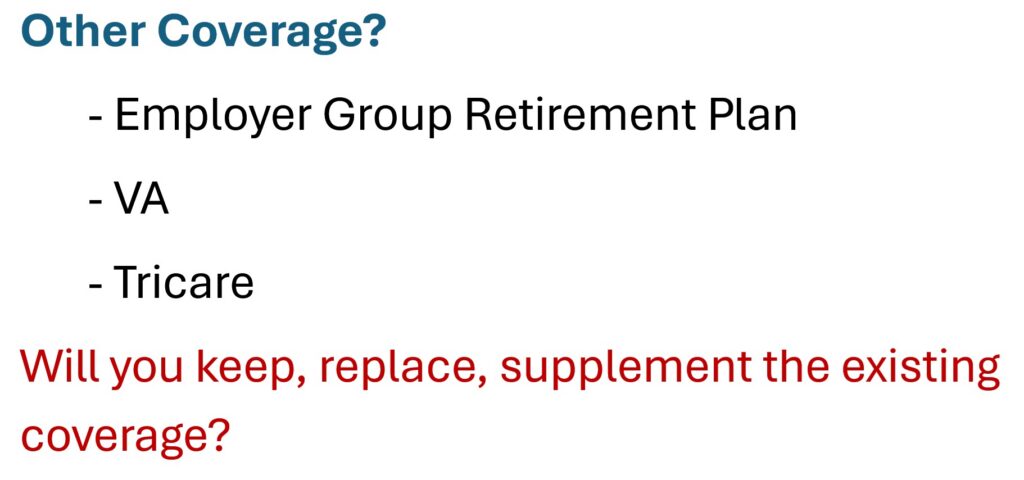
It’s also important to learn if you or your family member will have any other coverage like an employer group retirement plan, VA (Veterans Administration) or Tricare for life. Sometimes you do not want to leave an employer group plan because once you leave you may not be able to get it back. Sometimes people will stay with VA for drug coverage but need additional help for healthcare services through a Medicare Advantage plan. Talk with those organizations to make sure that none of the changes you may be making such as enrolling in a drug plan or Medicare Advantage plan will for some reason terminate coverage in that existing group plan.
Preferred Providers
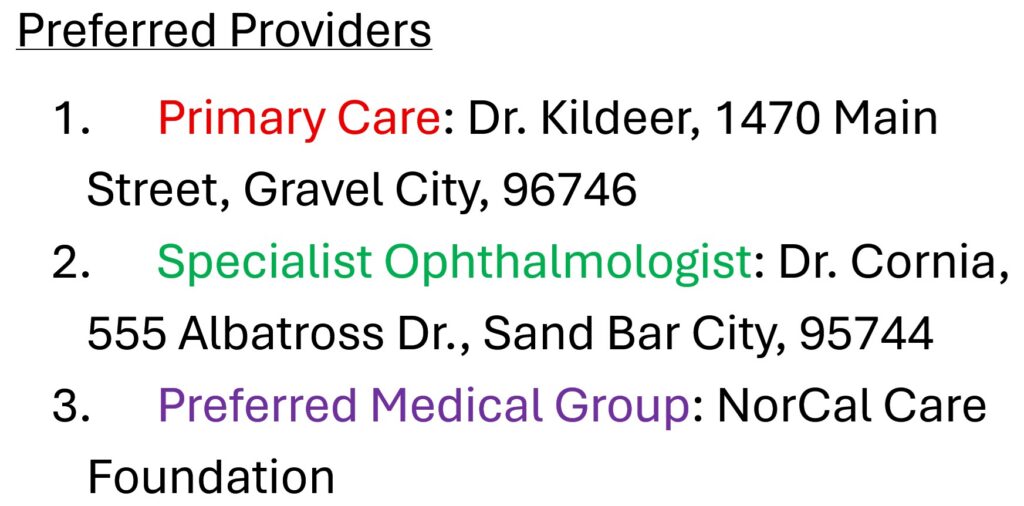
You will want to make a list of the physicians and providers that you are seeing to make sure later on that they are in network for any plan that you may be selecting. This includes your primary care physician and not just the name of the doctor but also the address. Some doctors can work at different addresses and they may be in network with one plan but at a different address not in network. It can be helpful if you know the preferred medical group. Medicare Advantage plans tend to be HMOs and you will want to have a primary care physician associated with that Medical Group so that the referrals to the specialists are easily handed off.
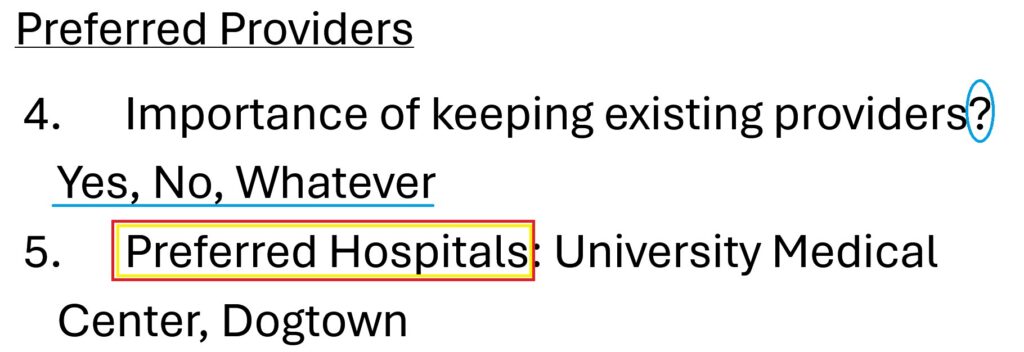
Additionally, you will want to consider whether you really care about keeping these providers that you have been seeing. Are they really important to you or maybe they’re not at all? If they are mission critical to keep them, then you’re really going to be focusing on those plans that have those providers in network.

When I do a Medicare needs analysis or a Medicare profile the doctors that I have put into the system will show as either in or out of network for different Medicare Advantage plans.
Preferred Pharmacy

The pharmacy can make a big difference in the cost of the drugs in the Medicare Advantage and Part D drug plans. These plans can have preferred pharmacies and standard pharmacies, and some pharmacies are out of network. If your pharmacy is out of network then none of the drugs will be covered. It’s very important to select a pharmacy that is in network at a minimum. Preferred pharmacies will have lower drug costs versus a standard pharmacy.
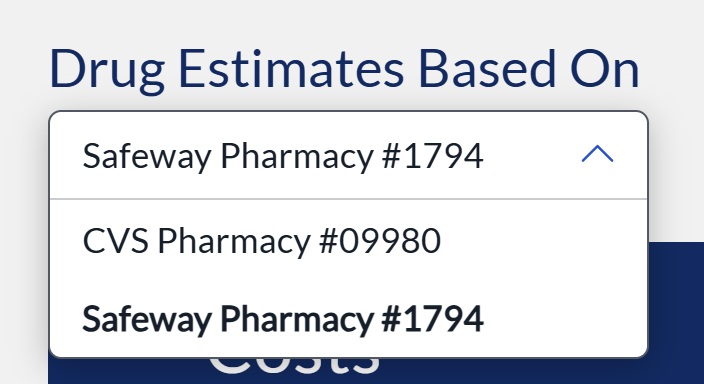
But even above that if you visit a preferred pharmacy the drug prices can be lower and that can be significant some people like to use mail order pill pack and that’s completely fine but each Medicare Advantage or Part D drug plan will have a specific mail order pharmacy they use.

When I do a Medicare needs analysis if there’s more than one pharmacy that an individual can go to I will put it into the system. It is interesting how with some drug plans a particular pharmacy that is preferred will have much lower drug costs. Your preferred grocery store or independent pharmacy may be a preferred pharmacy with the best pricing offered for your selected drug plan.
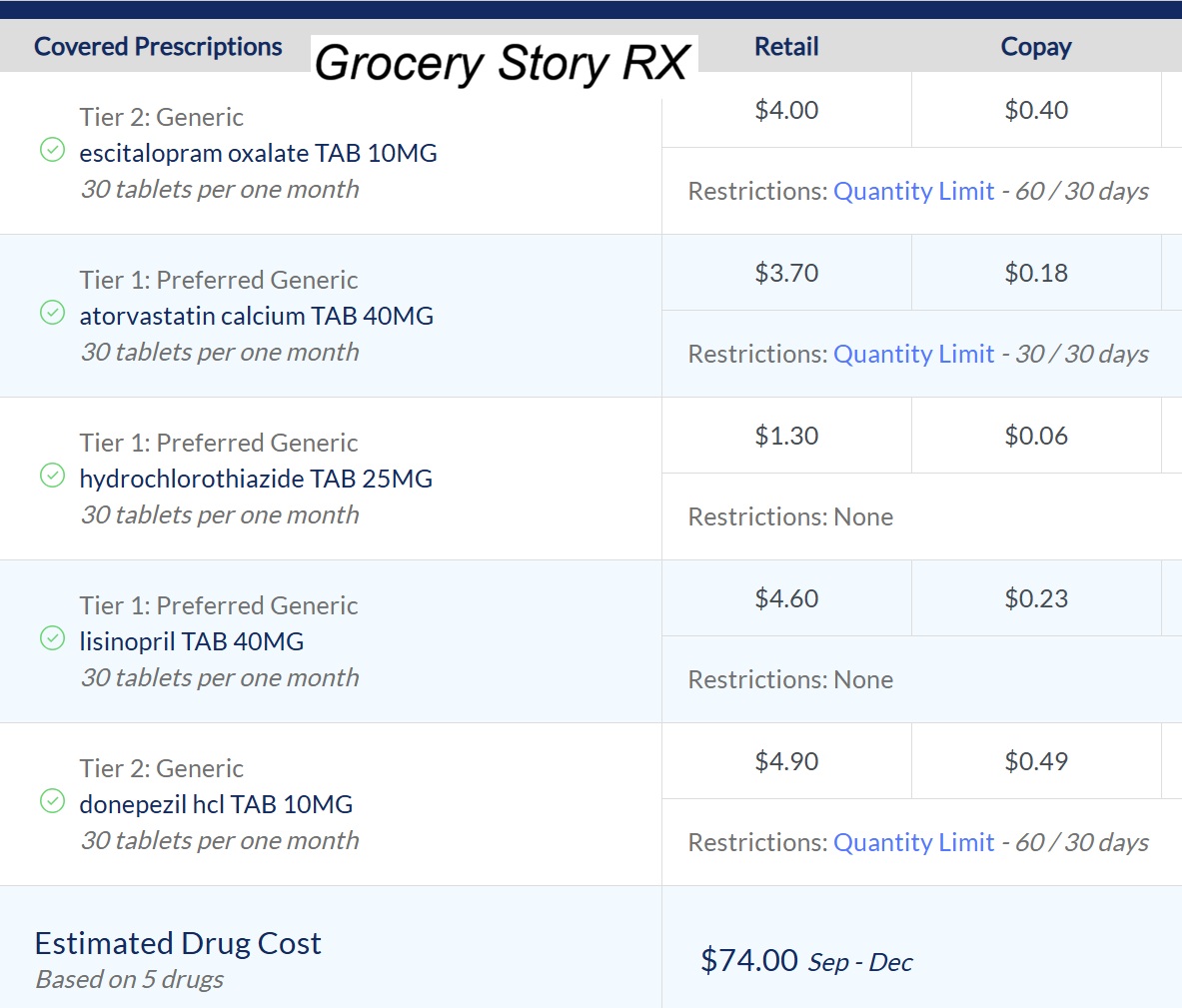
In this particular situation I have CVS and Safeway listed as potential pharmacies. When I look at the CVS prices for this individual’s drugs you can see that the generic drugs are all less than $2.00 per month. When I switch to the grocery store pharmacy you can see how the drug prices double. However, you will have to consider the lower costs of the drugs versus your preferred pharmacy and the monthly premium of the drug plan.
Prescriptions
Next you’ll want to make a detailed list of all the prescription medications that are received through a retail pharmacy or mail order. It’s important to list
- Brand or generic name of drug
- Form: tablet, capsule, injection, emulsion drops, cream.
- Dosage
- Frequency
- Packaging
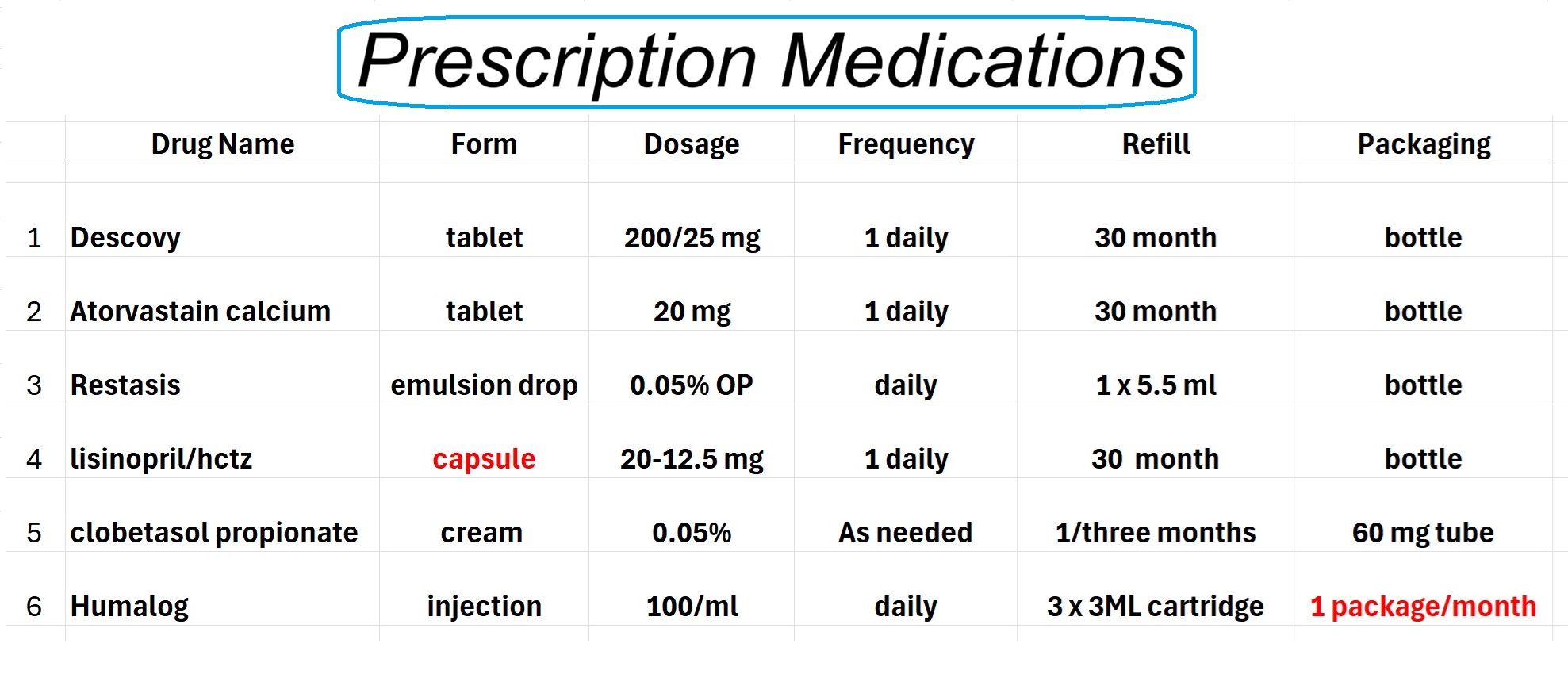
Oddly, some common generic drugs are covered in tablet form but not capsule. You may have to pay the full retail cost of the capsule version of the drug if that is form you can tolerate. You can also request a formulary exception to have the capsule version added to your plan. The packaging is important because if you select enter the incorrect packaging, your drug costs maybe erroneously high or low.
Medi-Cal Medicare Savings
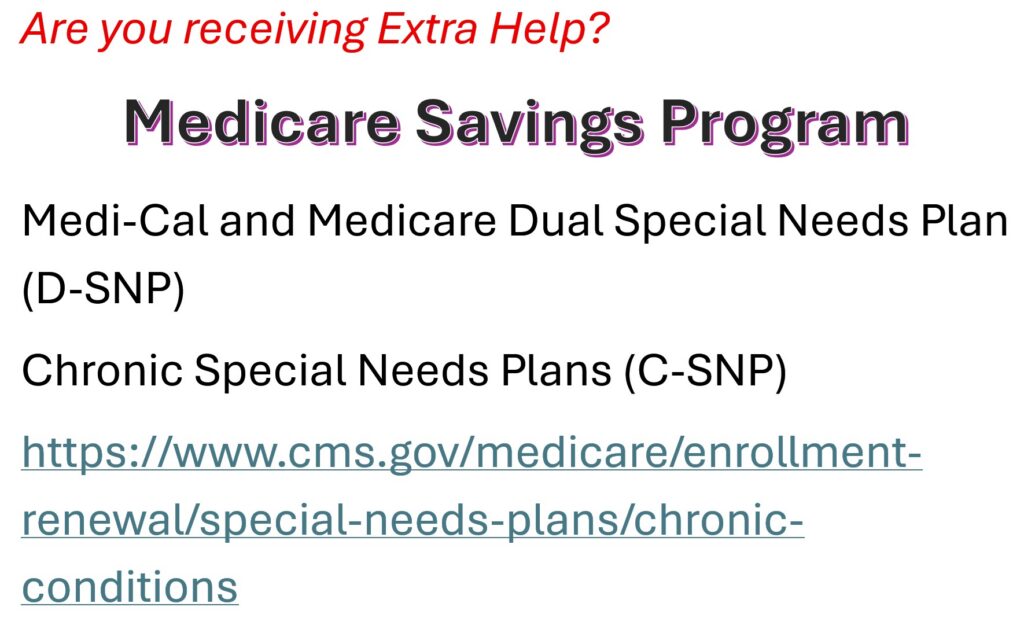
Another question to consider is if you or the person you’re helping is receiving any sort of help from Medi-Cal or Medicaid in other states through the Medicare savings program. If the individual is receiving help through Medi-Cal they may be eligible for a dual special needs plan and those are plans that help cover the costs and align providers within the plans so that the Medicare beneficiary doesn’t go out of network and then get a billed a really high cost for the healthcare services.
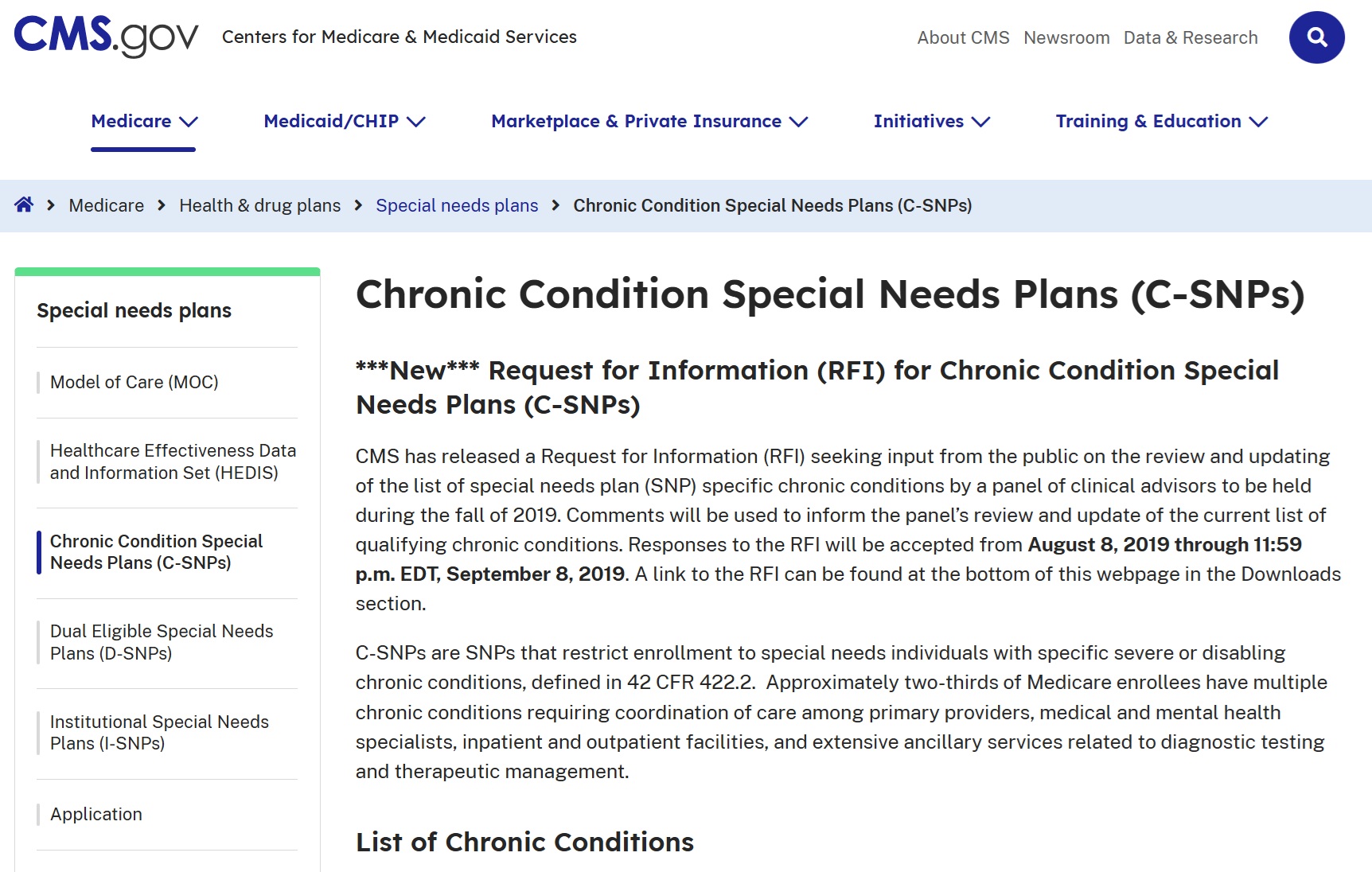
Medicare.gov outlines the dual eligible special needs plans (D-SNP) which are often referred to as Medi-Medi and there are various levels that someone may be eligible for and different levels of assistance. That page will also the chronic special needs plans (C-SNP). Depending on where you live some of the Medicare Advantage plans may offer D-SNP chronic special needs plans that are targeted for certain chronic illnesses to provide extra support for the individual.
Social Security LIS
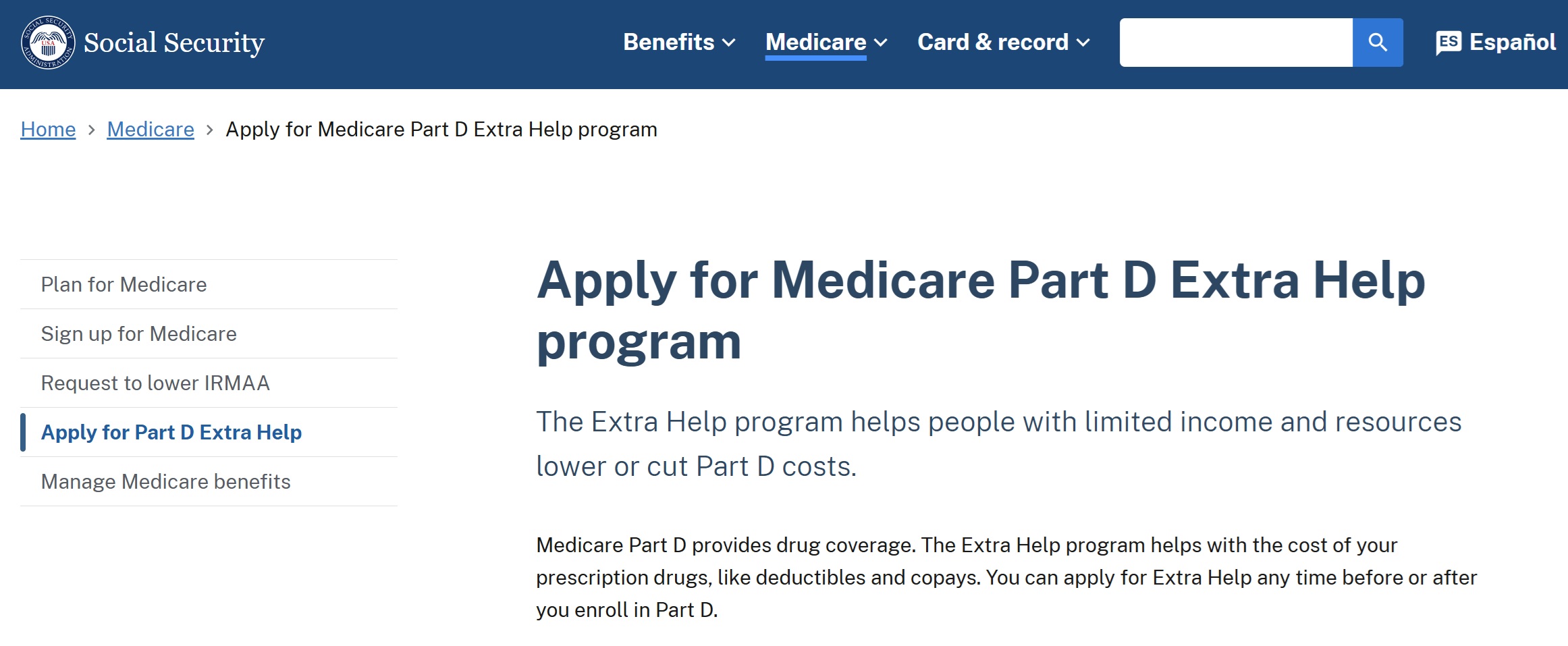
Something that happens in the background is if someone is eligible for the Social Security low income subsidy (LIS) for the Part D drug plans. Social Security knows the individual’s income and whether they may qualify. It is always good to apply through Social Security to see if Social Security might help out with reducing the cost of the drugs or picking up the premium for the drug plan.
Supplemental benefits and coverage
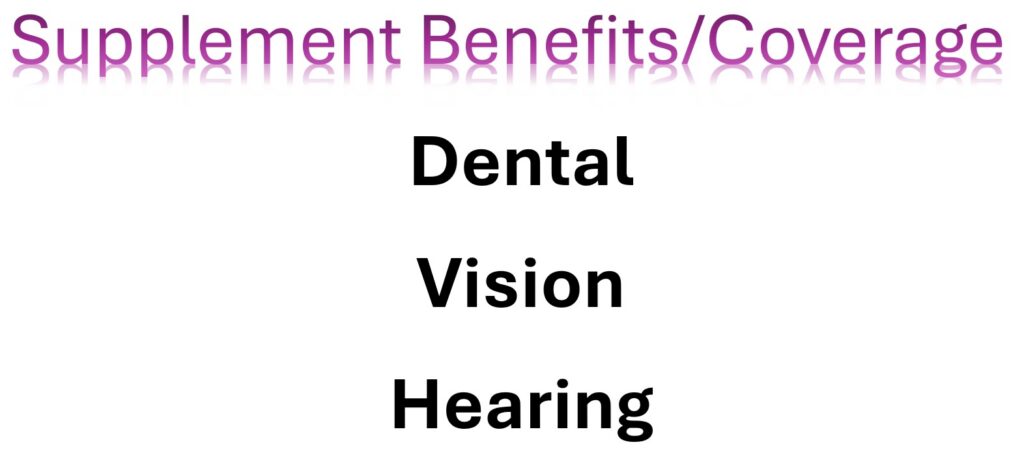
Many people would like to have dental, vision, and hearing coverage because original Medicare does not cover any of those services. Some of the Medicare Advantage plans will include some benefits for dental, vision and hearing. Adding dental, vision, and hearing needs to the list will help you sort through plans that may offer those supplemental benefits.
Supplemental Support

Finally, some people have particular needs that require assistance such as transportation. There are many Medicare Advantage plans that will offer a transportation benefit to and from doctor appointments. You will want note special situations so you may want to look out for those you’ll want to note if someone may need meals after hospitalization, or if additional assistance for over-the-counter pharmacy items may be helpful.
YouTube video on creating a Medicare Needs Analysis.