Why careful timing can help prevent gaps in coverage

Moving from a Medicare Advantage plan back to Original Medicare with a Medicare Supplement (Medigap) plan requires careful coordination. The goal is to align three events: the end of your Medicare Advantage coverage, the start of your Medicare Supplement policy, and the start of a standalone Part D prescription drug plan.
This guide explains the two main enrollment periods that may make the transition easier, what to expect from medical underwriting, and how to avoid an unintended lapse in coverage.
Can You Get a Medicare Supplement Plan After Initial Enrollment?
Yes. A common misconception is that you can never purchase a Medicare Supplement plan after your six-month Medigap open enrollment period, which generally begins when you are age 65 or older and enrolled in Medicare Part B. You may apply later, but unless you have guaranteed-issue rights, the insurer may require medical underwriting.
Medical underwriting typically involves answering health questions. Approval is not guaranteed, but routine chronic conditions do not automatically prevent someone from qualifying. The only way to know is to apply and receive the insurer’s decision before making other coverage changes.
Option 1: Medicare Annual Enrollment Period
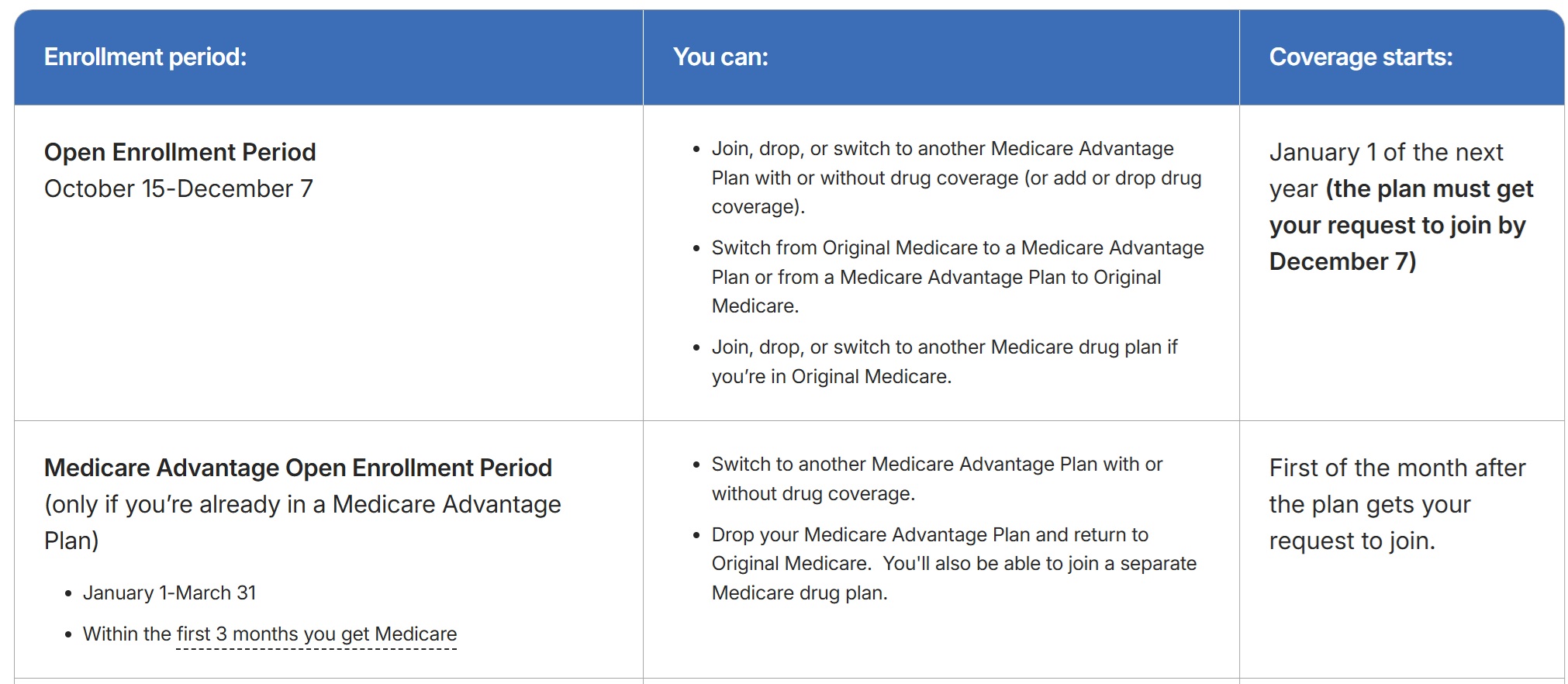
The Medicare Annual Enrollment Period runs from October 15 through December 7. This window can be used to coordinate a January 1 transition. All changes using the Annual Enrollment Period will result in a January 1 effective date for Medicare Advantage and Part D drug plans.
Recommended sequence
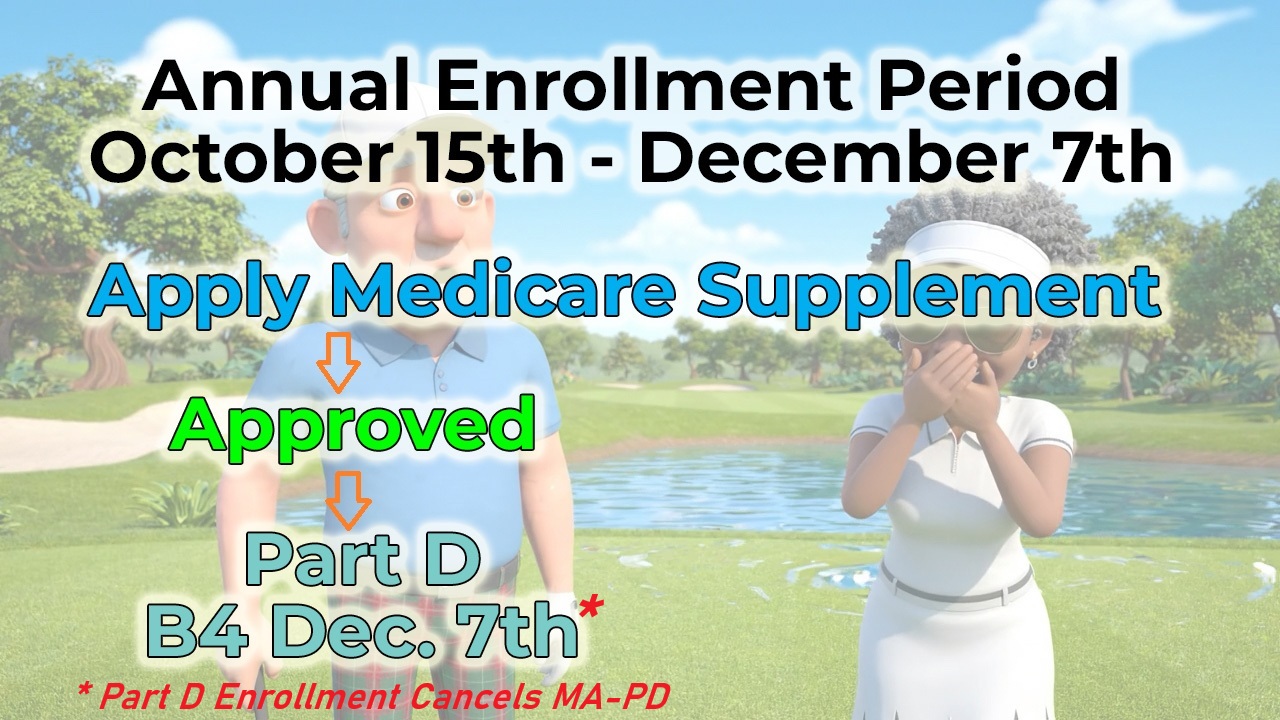
- Apply for a Medicare Supplement plan. Request a January 1 effective date and complete medical underwriting if required.
- Wait for the underwriting decision. Do not assume the policy will be approved.
- If approved, enroll in a standalone Part D plan by December 7. In most situations, enrolling in standalone Part D drug plan causes the Medicare Advantage plan to end on December 31 because you generally cannot have both Medicare Advantage coverage and a standalone Part D plan.
- Confirm all effective dates. The Medicare Supplement and Part D plans should begin January 1, immediately after the Medicare Advantage plan ends.
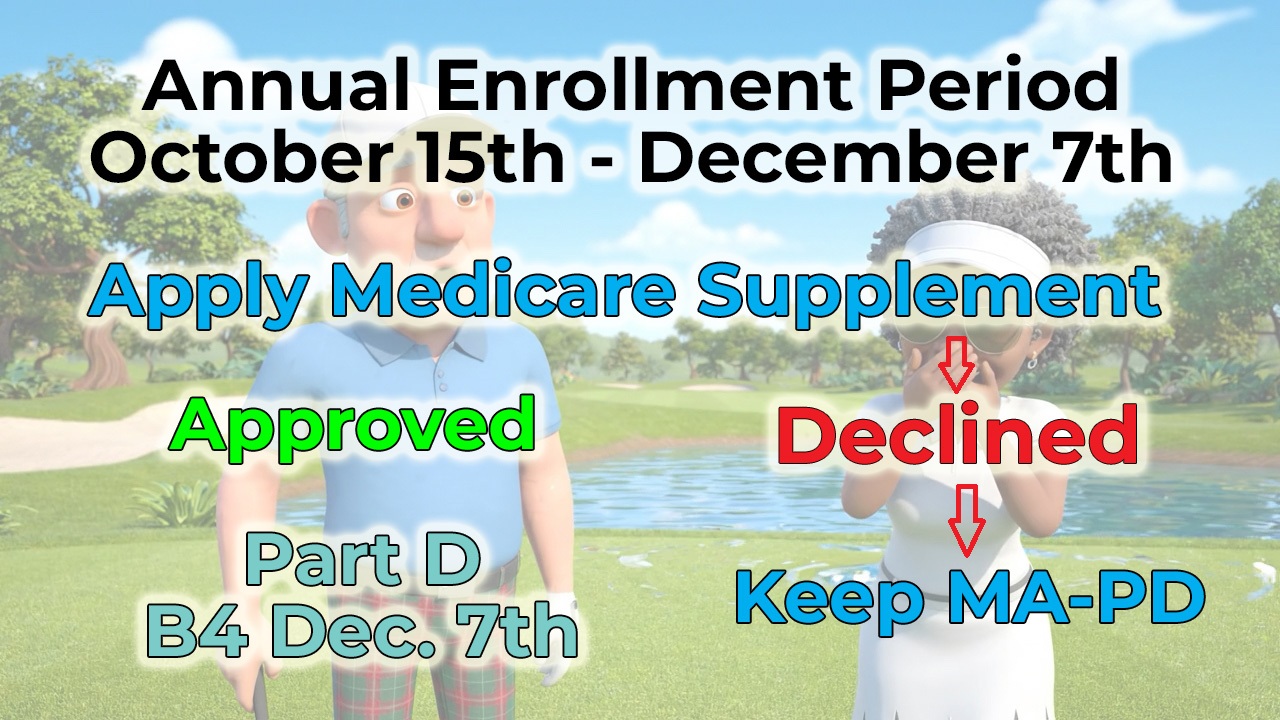
If the Medicare Supplement application is declined, you can retain your Medicare Advantage coverage or make another permitted Medicare Advantage plan selection by December 7. If the application is approved but you do not enroll in Part D, your Medicare Advantage plan may continue.
Important: A Medicare Supplement policy cannot be used while you remain enrolled in a Medicare Advantage plan. Be clear with your agent about your intention to leave Medicare Advantage if the Medicare Supplement application is approved. On the Medicare Supplement application, indicate a January 1st effective date is desired.
Option 2: Medicare Advantage Open Enrollment Period
The Medicare Advantage Open Enrollment Period runs from January 1 through March 31 and is available only to people already enrolled in a Medicare Advantage plan. During this period, you may make one change to another Medicare Advantage plan or leave Medicare Advantage, return to Original Medicare, and enroll in a standalone Part D plan.

How to coordinate the dates
Apply for the Medicare Supplement plan first and complete underwriting if required. If approved, enroll in a standalone Part D plan and make sure the Medicare Supplement effective date matches the Part D start date.
Coverage changes during this period generally take effect on the first day of the following month. For example, if you enroll in Part D during January, the Part D plan generally starts February 1 and the Medicare Advantage plan ends January 31. Your Medicare Supplement plan should also begin February 1.
What If Your Med. Sup. Application Is Declined?
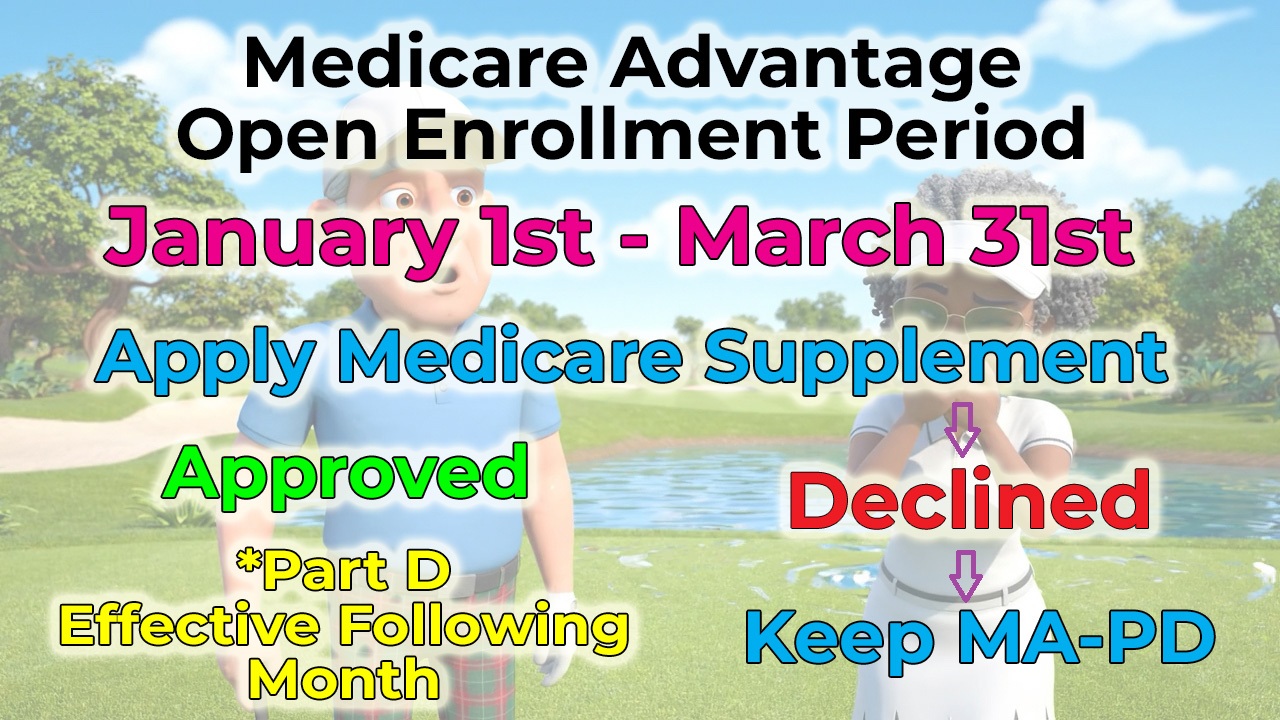
A denial does not necessarily mean you will never qualify. You may need to remain in, or select, a Medicare Advantage plan that meets your current needs. If the health issue that led to the denial is later resolved, you may be able to apply for Medicare Supplement plan again, subject to the insurer’s rules and underwriting requirements.
When Guaranteed-Issue Rights May Apply
Some circumstances create guaranteed-issue rights, meaning an insurer must offer certain Medigap policies without medical underwriting. Examples may include moving outside a Medicare Advantage plan’s service area or having a plan leave Medicare or stop being offered in your area.
Guaranteed-issue rules and special enrollment periods are complicated and depend on the specific event. Keep notices from your plan and verify your rights and deadlines before changing coverage. Medicare Supplement enrollment rules may also vary by carrier and state.
Final Checklist
- Apply for Medigap before ending Medicare Advantage coverage.
- Wait for written approval when medical underwriting applies.
- Coordinate the Medicare Advantage end date with the Medigap and Part D start dates.
- Confirm every effective date with the plans involved.
- Keep copies of applications, approval notices, and enrollment confirmations.
Get Help with Your Transition
Switching from Medicare Advantage to Original Medicare with a Medicare Supplement plan can be manageable when each step is completed in the correct order. If you have questions about timing, underwriting, or enrollment periods, contact a licensed Medicare insurance professional who can review your specific circumstances.
This article is for general educational purposes and is not legal or medical advice. Medicare rules and plan availability can change. Confirm current requirements with Medicare, the applicable insurance carriers, or a licensed insurance professional before making coverage decisions.
YouTube video on MA-PD to Medicare Supplement.