2018 FPL guidelines are updated for Medi-Cal determinations only and will not affect eligibility for Covered California consumers. The Covered California 2017 levels are used for the 2018 benefit year.

Kevin Knauss: Health, History, Travel, Insurance
Posts related to the Covered California application, consumer account, estimating income, household size, monthly subsidies, health plans, Medi-Cal, and terminations.
2018 FPL guidelines are updated for Medi-Cal determinations only and will not affect eligibility for Covered California consumers. The Covered California 2017 levels are used for the 2018 benefit year.
While it may seem like Covered California is big brother looking over your shoulder or studying your tax return in a darken closet with the flash light, they aren’t. They are able to let their computer software check discreet pieces of data that relate to your eligibility for health insurance and any premium tax credit. But no one Covered California is making any decisions on eligibility or tax credits for the past, present, or future, based on reviewing your tax return. They just don’t have access to it.
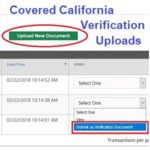
Once the document has been uploaded it will show up in the Documents & Correspondence table. You then want to go to the Action column, click on the drop down menu Select One, and select Submit as Verification Document. This will bring up a popup window (make sure you’re the popup blocker of your web browser is disabled) where you can select the household member, the document category, and the type of document being uploaded. Then click Submit.
For a single adult applying through Covered California, the monthly income must be greater than 138% of the Federal Poverty Level ($1,397 monthly, $16,754 annually) in order to qualify for private health insurance with the premium tax credit subsidy. If the individual or household is below 138% of the FPL, they will be deemed eligible for Medi-Cal.
A glaring deficiency in the report is the failure to attribute any decline in enrollments, either on the federal level or at Covered California, to an improving economy. Unemployment is at record low percentages and more people are working for employers who offer group health plans. Covered California’s own small group plans have seen increased enrollment since its inception in 2014 and their budget report estimates continued enrollment growth.
I find it amusing that the strategy to kill off government funded and managed health insurance for people may be the very illustration and demonstration of how single payer can work. The added benefit is a nod to the fact that, if included, volunteer work or family care work is treated as equally valuable as a wage earning job for eligibility for Medicaid. This is an acknowledgement that people volunteering in our communities plays an important role in the maintenance of the community fabric.
If you own a small business or receive income for a service you provide, and most likely file a schedule C with your tax return, you should consider having your estimated taxable income reviewed by your tax planner. The IRS has noted that as they develop guidance for all of the changes to the tax regulations for 2018 they will be posting them on their website.
The real looming threat is the loss of health plans participating in the IFP market. In 2017 three carriers dominated the market with 72% of the enrollments: Anthem Blue Cross 19%, Blue Shield 25%, Kaiser 28%. With the loss of Blue Cross in the major metropolitan markets such as the Bay Area and Southern California, two carriers, Blue Shield and Kaiser, are likely to command over 60% of the market place in 2018. If one of those two carriers determines that offering IFP plans is just too risky in 2018, it could lead to other carriers such as Health Net, Molina, or Oscar also pulling out of the market.
There a lots of different dental plans off-exchange or outside of Covered California. The number of plans makes comparisons complicated and confusing. Delta Dental and Anthem Blue Cross offer dental plans through Covered California and a variety of different plans off-exchange. The single largest difference between the Covered California plans and the ones offered off-exchange is the 12 month waiting period for major dental work such as extractions, root canals, and crown. The six month waiting period usually applies to minor restorative work such as getting a cavity filled.
Upon submitting your application for 2018, the Covered California system checks your eligibility for 2017. If the system finds you ineligible, which you mostly likely are because you are not applying for 2017 coverage, the system automatically generates a letter informing you that you are not eligible for 2017 coverage.