Special Supplemental Benefits for the Chronically Ill (SSBCI) are embedded in some Medicare Advantage plans. The extra benefits help support individuals who are challenged with a chronic illness.

The special benefits are not primarily health related. They are meant to help support individuals who face certain challenges because of a chronic illness. Another goal of the SSBCI support is to help prevent unexpected hospitalizations from the illness.

Non-Health Related SSBCI Extra Help
The special extra benefits may include:


- Allowances for health food and groceries
- Assistance with monthly utility bills
- Non-medical transportation
- Subsidies for rent or mortgage payments
- In-home safety equipment
- Pest control services
- Pet care if the individual is hospitalized
Eligibility for SSBCI

To be eligible for the Special Supplemental Benefits for the Chronically Ill you must have a chronic condition. Medical records may be used to verify the condition. Your primary care physician may be asked to verify the condition. In lieu of supporting documentation, initially, the Medicare beneficiary may be able to manually attest to the condition.
Variety of Chronic Conditions Qualify for SSBCI
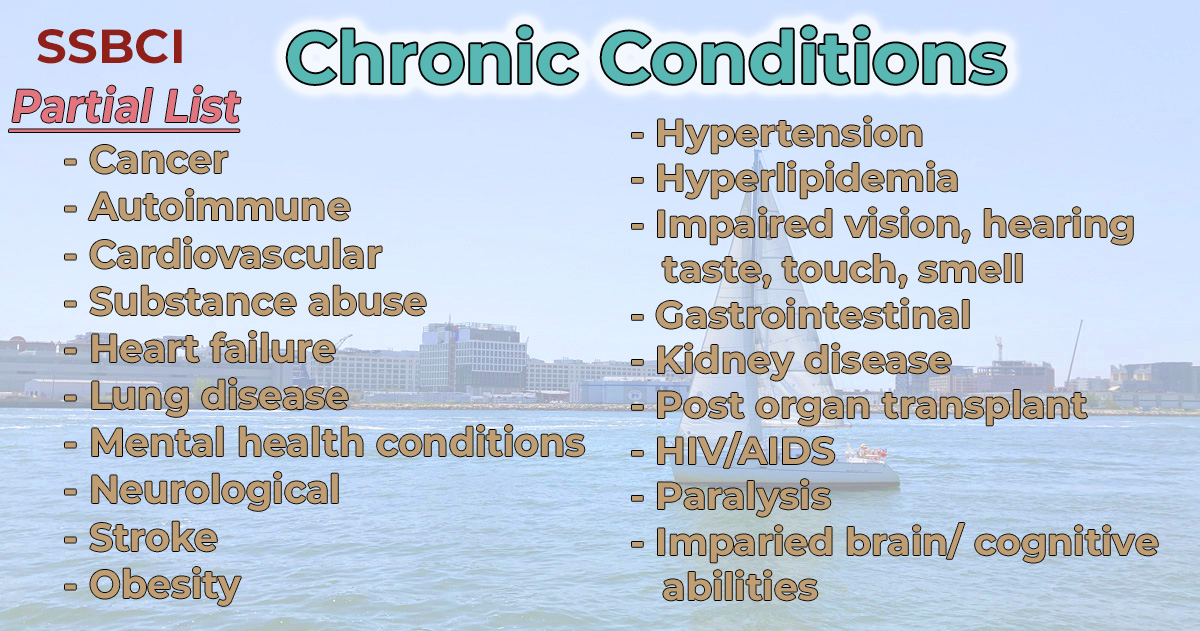
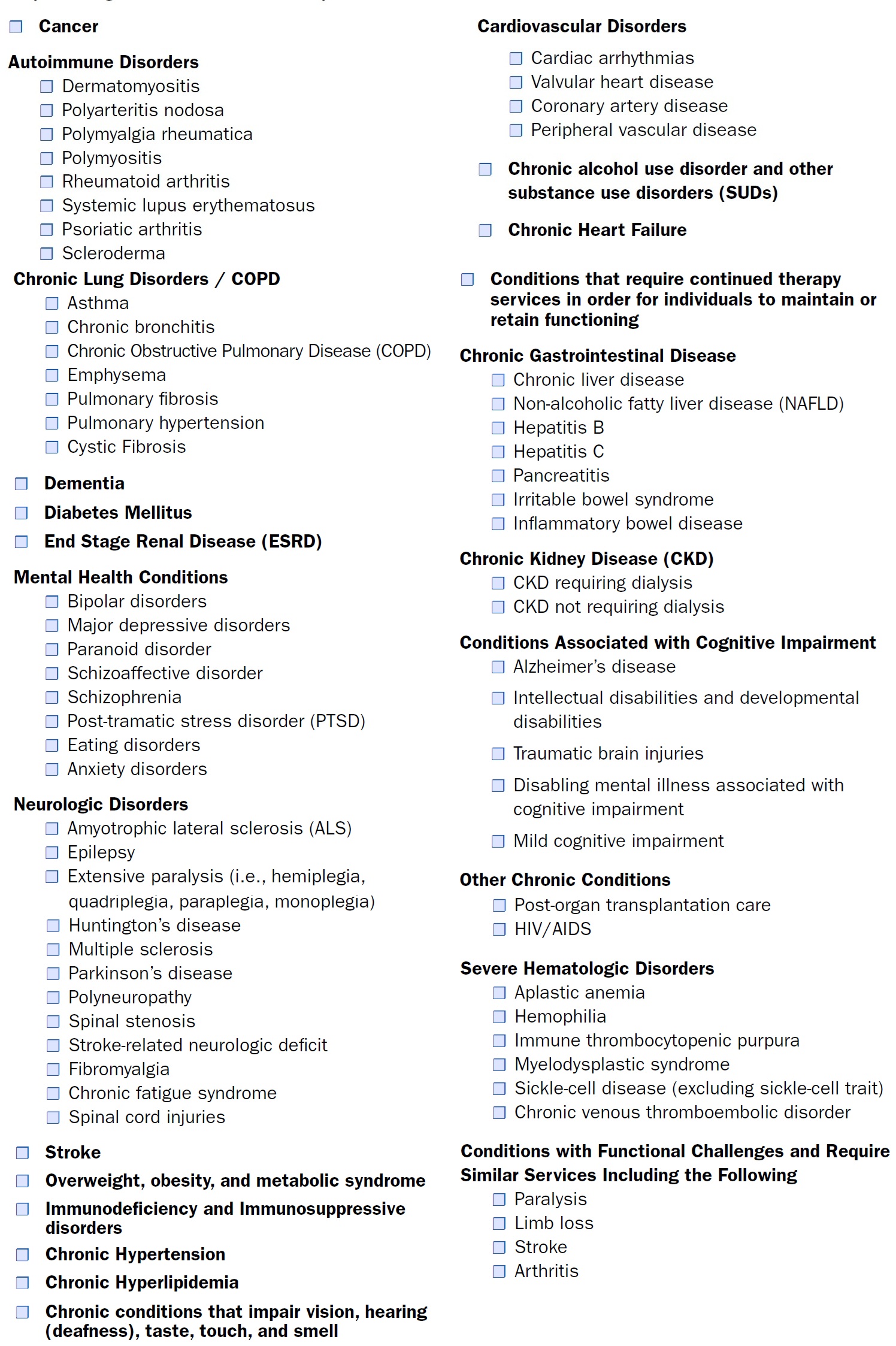
A partial list of categories of chronic conditions that may qualify for the SSBCI are
- Autoimmune disorders
- Cancer
- Cardiovascular disorders
- Chronic alcohol or substance abuse
- Heart failure
- Lung disorders / COPD
- Dementia
- Diabetes Mellitus
- End Stage Renal Disease
- Mental health conditions
- Neurological disorders
- Stroke
- Obesity
- Hypertension and hyperlipidemia
- Impairment of vision, hearing, taste, touch, or smell
- Gastrointestinal disease
- Kidney disease
- Cognitive impairment
- HIV/AIDS
- Hematological disorders
- Paralysis or impairment of limbs
A Medicare Advantage plan with SSBCI is a good alternative for someone with a chronic illness and there are no Chronic Special Needs Plans (C-SNP) being offered in the Medicare beneficiaries county.

Not all plans include the SSBCI support. You can enroll in a Medicare Advantage plan that has the SSBCI even if you don’t qualify for the extra benefits. You can search on Medicare.gov for plans that include SSBCI. You can also ask your insurance agent to search for Medicare Advantage plans that include SSBCI that might support you.