It appears the health plan invoiced for the higher premium plus the excess subsidies paid in January and February. Consequently, the March invoice was $314.00 the combination of $275.58 + $19.21 + $19.21.

Kevin Knauss: Health, History, Travel, Insurance
It appears the health plan invoiced for the higher premium plus the excess subsidies paid in January and February. Consequently, the March invoice was $314.00 the combination of $275.58 + $19.21 + $19.21.
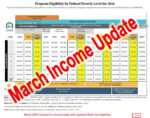
Covered California has revised their income table to reflect the higher federal poverty levels. The higher dollar amount numbers are effective March 2026. The revision only applies to Medi-Cal programs. When reviewing any income table update, make sure the date in the lower right-hand corner is 3/2026. That is the revised table from the 10/2025 […]
Submitting the online attestation for all of the household members, should clear the verification request. Confirm that all household members are no longer under the proof of income verification request. Once complete, you will be in good standing with Covered California for proof and verification of income. If you change your income during the year, a new income verification request may be generated.
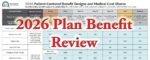
The Bronze 60 plan may be a good option for people who are looking to save money and do not use health care services on a regular basis. The Bronze 60 has unlimited office and urgent care visits at $60. You get three specialist visits at $95. Lab tests are unlimited at $50. All other health care services are subject to the medical deductible of $5,800. The Bronze 60 has a maximum out-of-pocket amount of $9,800.
New for 2026 is an orange band on top of the table. This is the income range that California will provide additional subsidy to help lower health insurance premiums for low income families and individuals. The extra subsidy will be provided to incomes up to 165 percent of the federal poverty level. There is a new 165% column indicating the maximum annual income that the subsidy is eligible for.
If the enhanced subsidy lapses, and Covered California must return to the pre-2021 subsidy curve, the consumer responsibility for health insurance increases. For the individual estimating $50,000, based on 2025 federal poverty level, they are still 343 percent FPL, but the consumer responsibility percentage increases from 7.08 percent to 9.78 percent*. (*Consumer Responsibility from IRS 2020 form 8962 instructions.)
The underlying rational for the new rules is that CMS perceives consumers to be cheating the system. With no evidence presented, CMS believes that consumers are receiving subsidies and health insurance they are not entitled to. They accuse individuals, families, and agents of committing fraud. Again, they present no evidence to support their supposition. The focus of CMS is to save money and if people are denied health insurance and health care, that is simply collateral damage to achieving the goal of less federal expenditures. The new rules are meant to save money and help the health insurance companies.
The Covered California application has been updated to better recognize and process documents related to confirming the identity of the applicant. With just the information on the application (name, address, date of birth, and social security number) the system can now quickly verify the applicant. Covered California has done away with the identity proofing questions.
Once your application for health insurance is approved by Covered California, the clock starts ticking on the Reasonable Opportunity Period (ROP) of 95-days to submit any proof or verification requests from Covered California. If they do request verification for conditional elements such as income, immigration, or minimum essential coverage, they will send you a letter.
Except for a few qualifying life events, you have a 60-day special enrollment period window to enroll in health insurance from the date of the event. The qualifying life events listed below are of May 2025. Proposed rule changes by the Trump administration may mean some events are no longer eligible for the special enrollment period.