Apply for the Medicare Supplement plan first and complete underwriting if required. If approved, enroll in a standalone Part D plan and make sure the Medicare Supplement effective date matches the Part D start date.

Kevin Knauss: Health, History, Travel, Insurance
Posts related to Medicare Supplement or Medi-Gap plans that cover the health care costs that Original Medicare does not.
Apply for the Medicare Supplement plan first and complete underwriting if required. If approved, enroll in a standalone Part D plan and make sure the Medicare Supplement effective date matches the Part D start date.
It’s also important to learn if you or your family member will have any other coverage like an employer group retirement plan, VA (Veterans Administration) or Tricare for life. Sometimes you do not want to leave an employer group plan because once you leave you may not be able to get it back. Sometimes people will stay with VA for drug coverage but need additional help for healthcare services through a Medicare Advantage plan. Talk with those organizations to make sure that none of the changes you may be making such as enrolling in a drug plan or Medicare Advantage plan will for some reason terminate coverage in that existing group plan.
But does the High Deductible Plan G protect you from catastrophic Medicare health care costs? In the example below, the Medicare beneficiary has a medical event where they must be hospitalized for five days. They must then reside in a skilled nursing facility for 30 days to recuperate. The costs are 2026 and 2036 where a 5 percent inflation adjustment has been applied to the Medicare costs.
A few of the carriers will offer discounts on dentistry, optometry, pharmacy purchases, and hearing exams and hearing aids. These discount offerings are NOT insurance. Some of the carriers also offer dental, vision, and Part D prescription drug plans. It’s possible that those carriers would rather you enroll in their insurance plans instead of using a discount program. The discount plans may be valuable for some people who can leverage the programs to save money.
When we add the Part B deductible, your total costs for the infusion therapy are $20,283. This cost is more than double the two-week hospital and 40-day nursing facility stay.
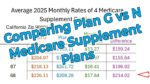
When we extrapolate the savings to an annual basis, Plan N rates are $214 lower than Plan G by age 68. This means that at age 68, an individual could incur ten $20 office visit copayments during the year and still pay less than Plan G (annual premiums plus copayments.) The individual could also have two emergency visits at $50 and five office visits at $20 and still pay less money.
The monthly insurance premium for Part B of Medicare is $185 for individuals who had earned less than $106,000 or $212,000 for a married couple filing a joint federal income tax return. As the household income increases, the insurance premium for Part B increases. For individuals who earned over $500,000, the Part B premium is $628.90 per month for 2025. Remember that the monthly premiums are per person. If a married coupled earned over $750,000 and are eligible for Medicare, each person will pay $628.90 for Part B.
Comparison of how community rated and attained age rated Medicare Supplement plans differ and discount to make them competitive.
In a switch from saving in a bad health year, Plan A with lower benefits delivers more savings than Plan G for the 65-year-old. This is because the premiums are lower and the only Medicare expense category covered is the Part B coinsurance. At age 75, because of the higher premiums, it costs the plan member more in premiums for the Medicare Supplement Plan A or G than the plans deliver in cost savings.
The great thing about Medicare is that you can build your train the way you want. You can change the train cars every year. But the important aspect is that you own the Medicare engine. You are the engineer and you can build your train the way you want it.