California is also expanding state-funded premium assistance for 2027. In 2026, the state subsidy applied through 165% of the federal poverty level. For 2027, the income range extends through 200% of the federal poverty level.

Kevin Knauss: Health, History, Travel, Insurance
California is also expanding state-funded premium assistance for 2027. In 2026, the state subsidy applied through 165% of the federal poverty level. For 2027, the income range extends through 200% of the federal poverty level.
Covered California appears to have kept many routine copays relatively stable while shifting more potential cost to members through higher maximum out-of-pocket limits.
To estimate how much Advance Premium Tax Credit subsidy you may have to repay, start with the Covered California Shop and Compare tool.
Regardless of the reason for the cancellation, you need to work with the health plan to bring your account current. Covered California can still be of assistance if your health plan was terminated because of an error in processing or request for documentation.
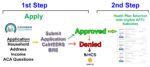
I have seen where the information all looks correct, but Medi-Cal never resubmitted the application. Medi-Cal changes their database and that of Covered California. However, if those changes are not properly processed through CalHEERS, your results may not be correct.
Covered California must perform periodic data matching between their enrolled members and federal databases. If they determine that a consumer is eligible for Medicare, and the individual is receiving subsidies for health insurance, they will be automatically discontinued.
It appears the health plan invoiced for the higher premium plus the excess subsidies paid in January and February. Consequently, the March invoice was $314.00 the combination of $275.58 + $19.21 + $19.21.
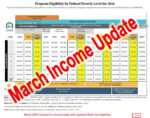
Covered California has revised their income table to reflect the higher federal poverty levels. The higher dollar amount numbers are effective March 2026. The revision only applies to Medi-Cal programs. When reviewing any income table update, make sure the date in the lower right-hand corner is 3/2026. That is the revised table from the 10/2025 […]
Submitting the online attestation for all of the household members, should clear the verification request. Confirm that all household members are no longer under the proof of income verification request. Once complete, you will be in good standing with Covered California for proof and verification of income. If you change your income during the year, a new income verification request may be generated.
The Bronze 60 plan may be a good option for people who are looking to save money and do not use health care services on a regular basis. The Bronze 60 has unlimited office and urgent care visits at $60. You get three specialist visits at $95. Lab tests are unlimited at $50. All other health care services are subject to the medical deductible of $5,800. The Bronze 60 has a maximum out-of-pocket amount of $9,800.